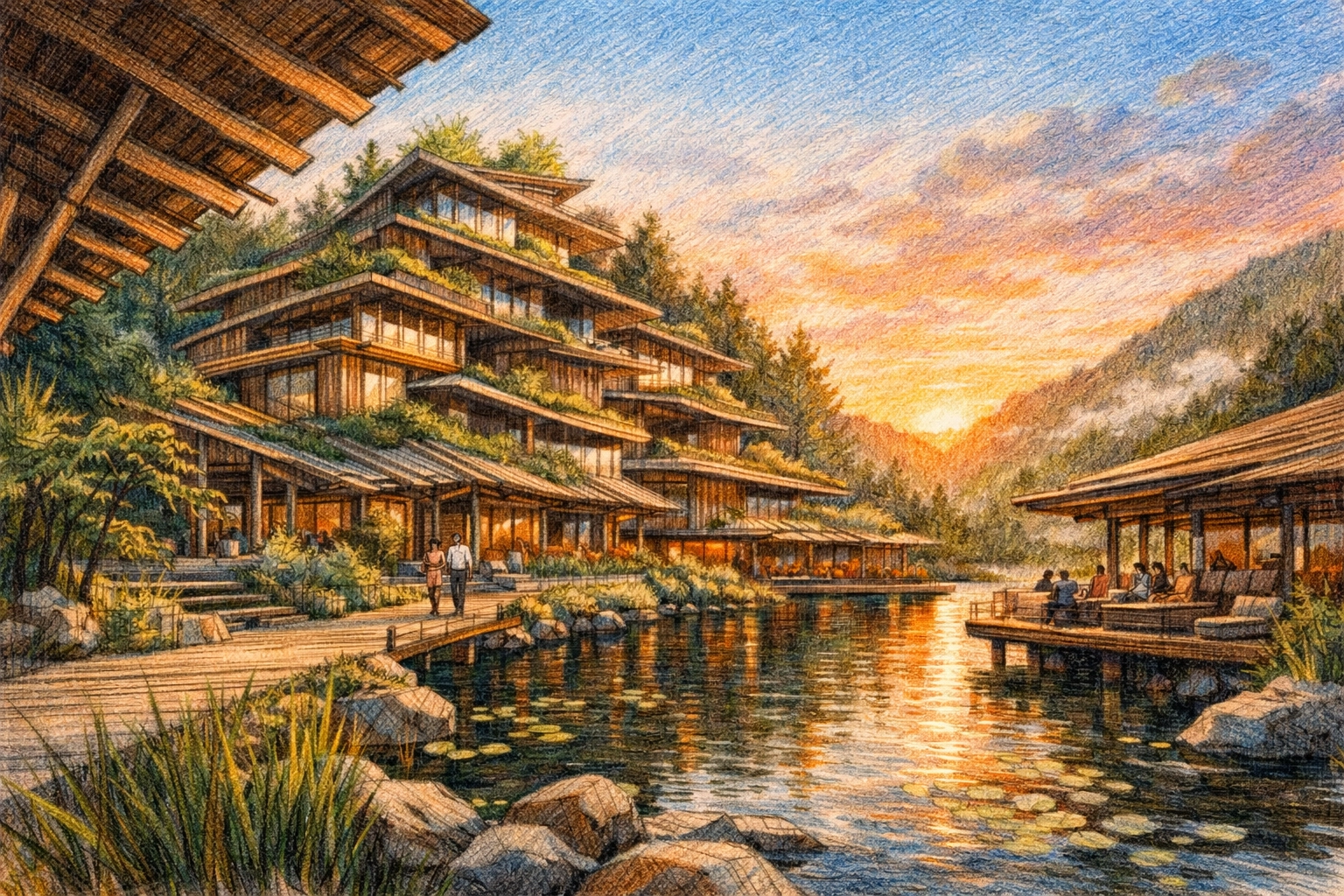
When we talk about "green" hotels, most people imagine a standard concrete building with some solar panels on the roof and a sign in the bathroom asking you to reuse your towels. For a long time, that was the industry standard for sustainability. It was a technical add-on, a list of checkboxes to satisfy a corporate social responsibility report.
But if you look at the work of Japanese architect Kengo Kuma, you’ll realize we’ve been looking at it all wrong.
Kuma doesn’t treat sustainability as a feature. For him, it is the foundation of the design itself. He is famous for saying that he wants his buildings to "disappear" into their surroundings. In a world of flashy, "look-at-me" luxury hospitality design, Kuma’s approach is a breath of fresh air. He’s proving that the future of sustainable hotel architecture isn’t about how much technology you can cram into a building, but how well that building can live in harmony with its environment and its community.
Let’s dive into why Kengo Kuma is the most influential figure in modern hotel design and how his philosophy is changing the way we think about travel.
The Philosophy of the "Anti-Object"
To understand Kuma’s hotels, you have to understand his philosophy of the "anti-object." Most architects want to create a monument, a solid, imposing structure that stands out. Kuma wants the opposite. He wants to break down the boundaries between the building and the nature around it.
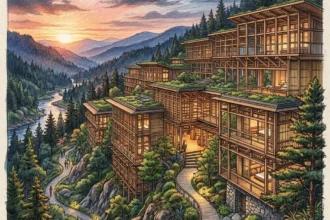
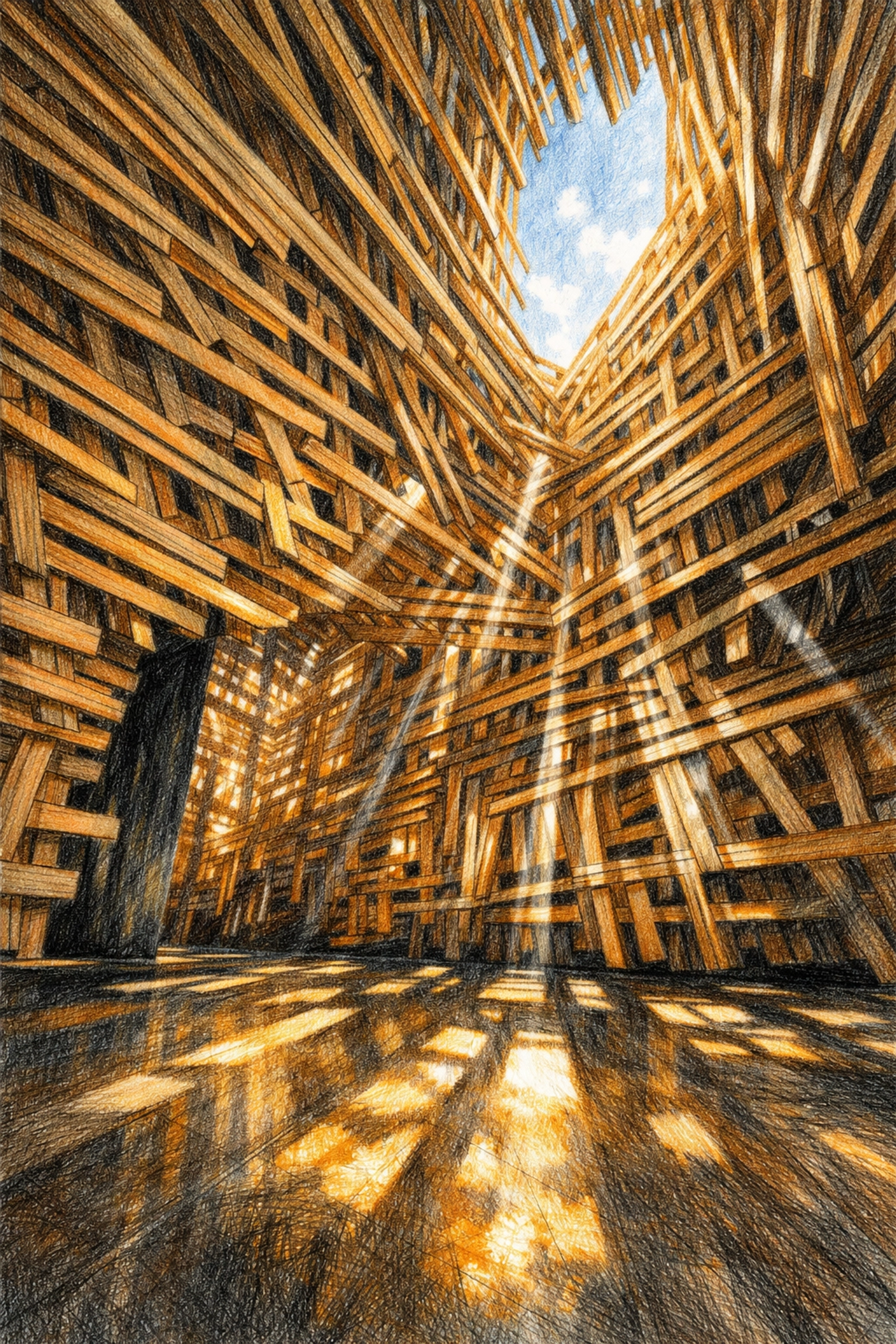
He achieves this through "particlization." Instead of big, heavy walls, he uses small components, slats of wood, screens of bamboo, or pieces of stone, to create a sense of lightness. This allows light and air to move through the building, making it feel more like a living organism than a block of concrete. For anyone interested in boutique hotel interior design, this is a masterclass in creating an atmosphere that feels both intimate and expansive.
Itomachi Hotel 0: The Future of Zero-Energy Hospitality
One of the most groundbreaking examples of Kuma’s work is the Itomachi Hotel 0 in Saijo, Japan. This isn't just a beautiful place to stay; it’s a blueprint for the future of the industry.
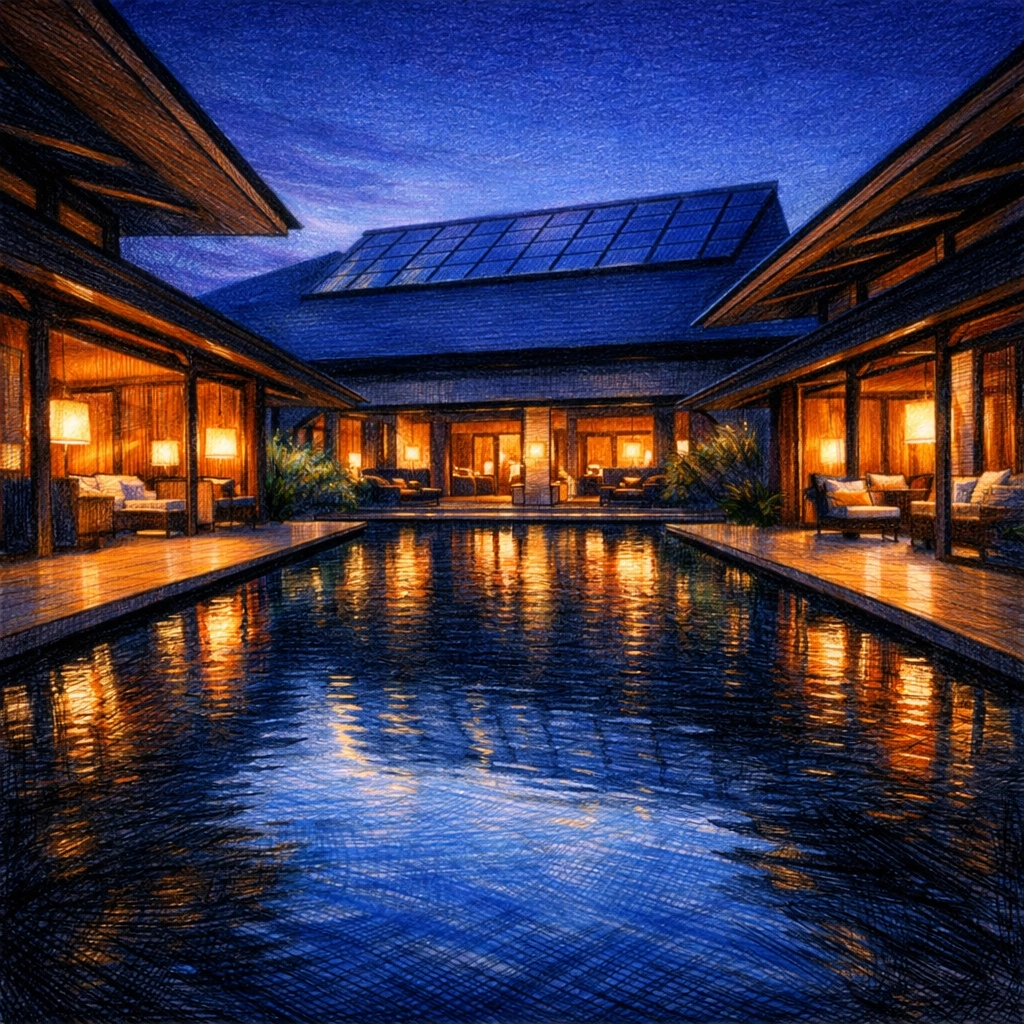
Itomachi Hotel 0 is Japan’s first "zero-energy" certified hotel. This means it generates more electricity from its solar panels than it consumes. But what makes it truly revolutionary is that it doesn’t stop at being carbon neutral. Kuma designed the hotel to be a "community hub."
During a crisis, like an earthquake or a major storm, the hotel is designed to provide emergency power, water, and food for up to 800 people in the local community. It shifts the hotel from being a closed-off commercial space for tourists into a vital piece of civic infrastructure.
The design itself is deeply tied to the local land. Saijo is famous for its natural spring water, and Kuma integrated this into the heart of the hotel. He created a central courtyard that functions as an "outdoor living room" where guests and locals can gather. This is a huge shift in luxury hospitality design. Luxury is no longer just about exclusivity; it’s about being part of something meaningful.
Materiality: Beyond the Aesthetic
Kuma is a master of materials. He doesn’t just pick things that look good on Instagram; he chooses materials that tell a story about the location.
At the Itomachi Hotel 0, he used:
- Local Ehime Cypress: Used for the massive eaves and screens, supporting the local timber industry.
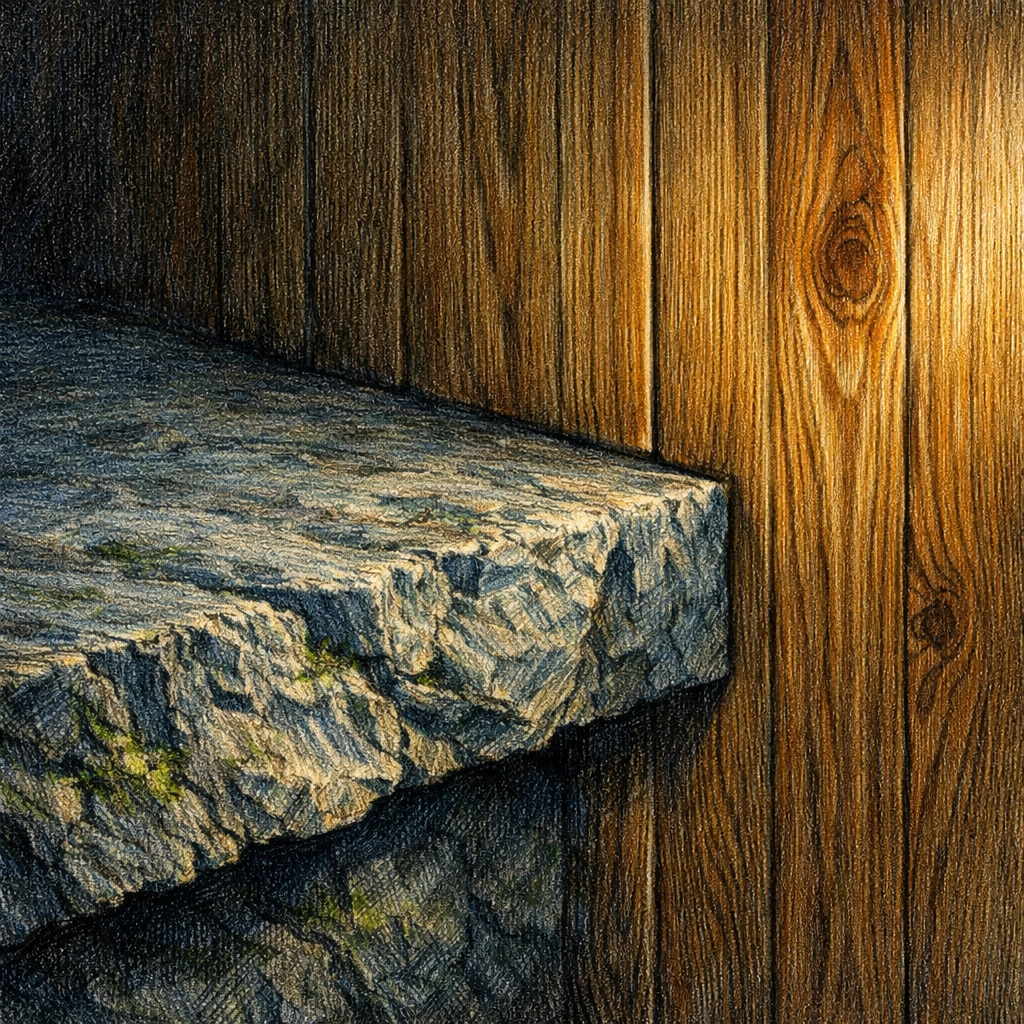
- Iyo Blue Stone: Found during the construction process and integrated into the counters and flooring.
- Recycled Materials: He even incorporated recycled fishing nets and waste from fluorescent lights into the furniture and fixtures.
By using local materials, he reduces the "embodied carbon" of the building (the energy used to transport materials). But more importantly, he creates a sense of "place." When you stay in a Kuma-designed hotel, you know exactly where you are. You aren't in a generic luxury box; you are in a building that grew out of the local soil.
1 Hotel Paris: Bringing the Forest to the City
While the Itomachi project shows what can be done in a rural setting, the 1 Hotel Paris (designed by Kengo Kuma & Associates) shows how these principles work in a dense urban environment.
In many city hotels, "nature" is limited to a few potted plants in the lobby. In 1 Hotel Paris, the vegetation is structural. Kuma designed a wooden facade with integrated planting spaces, effectively creating a vertical forest. The building features a massive central garden that connects the street to the interior, acting as a "green lung" for the neighborhood.
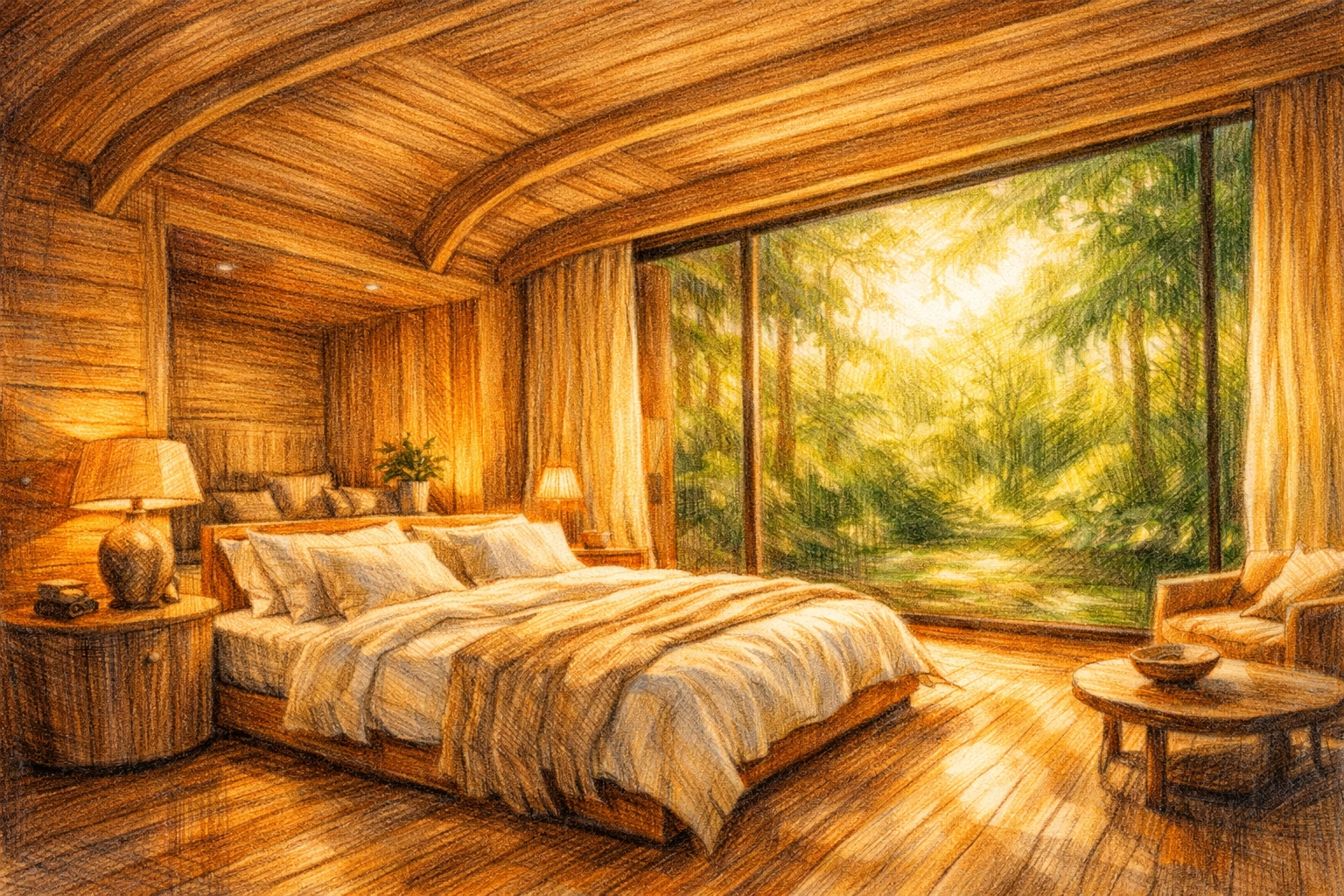
Inside, the guest rooms are wrapped in wood, offering views of the greenery outside. It feels less like a hotel in the middle of a busy city and more like a retreat in the woods. This is the ultimate goal of sustainable hotel architecture: to provide a restorative experience that heals both the guest and the environment.
Why Boutique Hotels Should Pay Attention
You might think, "Well, that’s great for world-famous architects with huge budgets, but what about smaller boutique hotels?"
The truth is, Kuma’s principles are even more effective on a smaller scale. Boutique hotel interior design is all about personality and connection. Here are three things every hotelier can learn from Kuma:
- Stop Hiding the Environment: Instead of trying to wall off the outside world to control the temperature, find ways to let the outside in. Use natural ventilation, large openings, and transitional spaces like porches and courtyards.
- Source Locally, Tell the Story: Don’t just buy furniture from a catalog. Work with local artisans. Use stone from a nearby quarry or wood from a local forest. Guests in 2026 want a story; they want to feel connected to the destination.
- Think Multi-Functional: A hotel shouldn't just be a place to sleep. How can your lobby serve the local community? How can your garden be a public asset? By opening up your space, you build brand loyalty that goes far beyond your guest list.
The "Human-Centered" Approach to Sustainability
Perhaps the biggest takeaway from Kengo Kuma’s work is that sustainability should be human-centered. For too long, we’ve talked about sustainability in terms of numbers: kilowatts, carbon tons, and LEED points. While those things matter, they don’t inspire people.
Kuma inspires people because his buildings feel good to be in. They are warm, tactile, and full of natural light. They respect the human scale. He reminds us that humans are biological creatures who have a deep, primal need to be near nature.
When a hotel is designed with this in mind, sustainability isn't a chore or a sacrifice. It’s an upgrade. A room made of natural, local wood feels better than a room made of synthetic materials. A courtyard filled with local plants and fresh air is more luxurious than a sealed lobby with heavy air conditioning.
Final Thoughts: A New Era of Hospitality
As we move further into the late 2020s, the "old" model of luxury is fading. The gold-plated, marble-heavy hotels of the past are being replaced by spaces that are mindful, sustainable, and deeply rooted in their communities.
Kengo Kuma has shown us that sustainable hotel architecture is not just about saving the planet; it’s about saving our connection to it. By using local materials, focusing on zero-energy performance, and designing for the community, he is proving that hotels can be a force for good.
At My Hotel Design, we believe that every hotel has the potential to be a landmark of sustainability, regardless of its size. It starts with a shift in mindset. It starts with thinking less about the "object" and more about the environment.
If you’re planning a project and want to explore how these principles can work for you, remember: don't just build a hotel. Build a place that belongs.
Want to learn more about the latest trends in hospitality design? Check out our other features on the blog or reach out to our team at My Hotel Design.