Hey there, I’m Robert Rupp, the founder of My Hotel Design. If you’ve been following the world of architecture and interiors for more than five minutes, you’ve heard the name Zaha Hadid. She was often called the "Queen of the Curve," and for a good reason. She didn’t just design buildings; she designed experiences that felt like they were pulled straight out of a sci-fi movie.
But here’s the thing: while her work looks futuristic, there are some deeply practical and incredibly brilliant lessons in her portfolio that any hotel owner or designer can use today. Whether you’re working on a massive 500-room resort or a cozy boutique hotel interior design project, Zaha’s approach to luxury hospitality design can teach us how to move away from "boring boxes" and toward spaces that guests will never forget.
Let’s dive into what made her work so special and how you can apply those lessons to your next project.
1. The Philosophy: Breaking the Rectangle
Zaha Hadid famously said, "I don't make nice little buildings." She hated the idea of a standard, modular room. In traditional hotel design, we are used to a grid: rectangular hallways, rectangular rooms, rectangular windows.
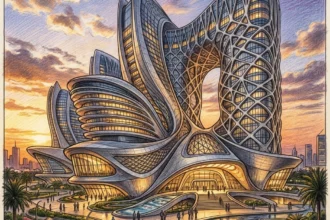
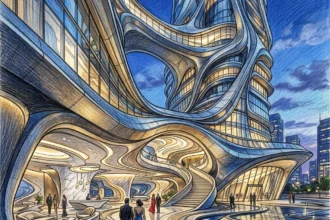
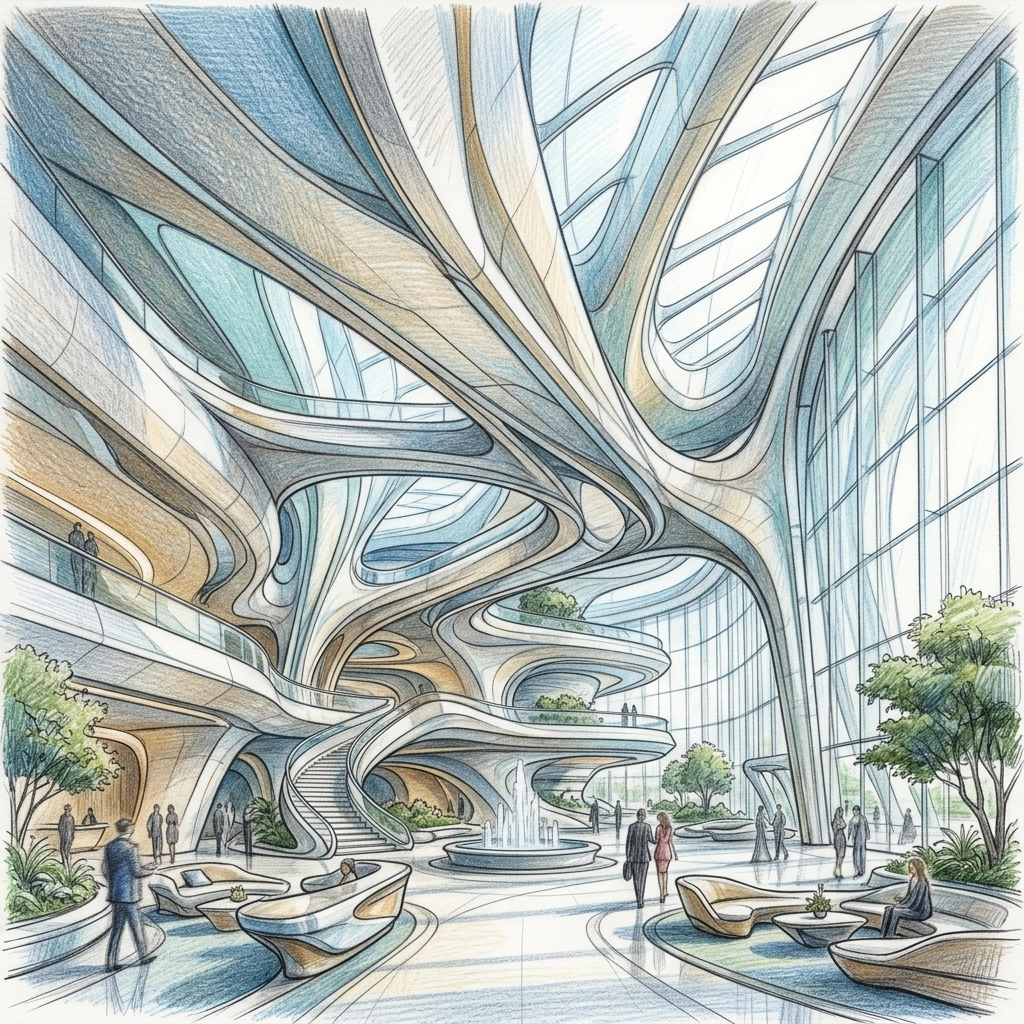
Hadid’s work focused on parametric design. Without getting too technical, this basically means using software to create fluid, organic shapes that mimic nature rather than a math textbook. In luxury hospitality design, this creates a sense of "flow." When a guest walks into a Hadid-designed space, they don't feel like they are being funneled through a corridor; they feel like they are moving through a living sculpture.
The Lesson: You don't need a multi-million dollar budget to break the "box" mentality. Look for ways to soften corners, use curved furniture, or create lighting installations that guide the eye in a non-linear way.
2. Creating the Sculptural Room: Silken Puerta América
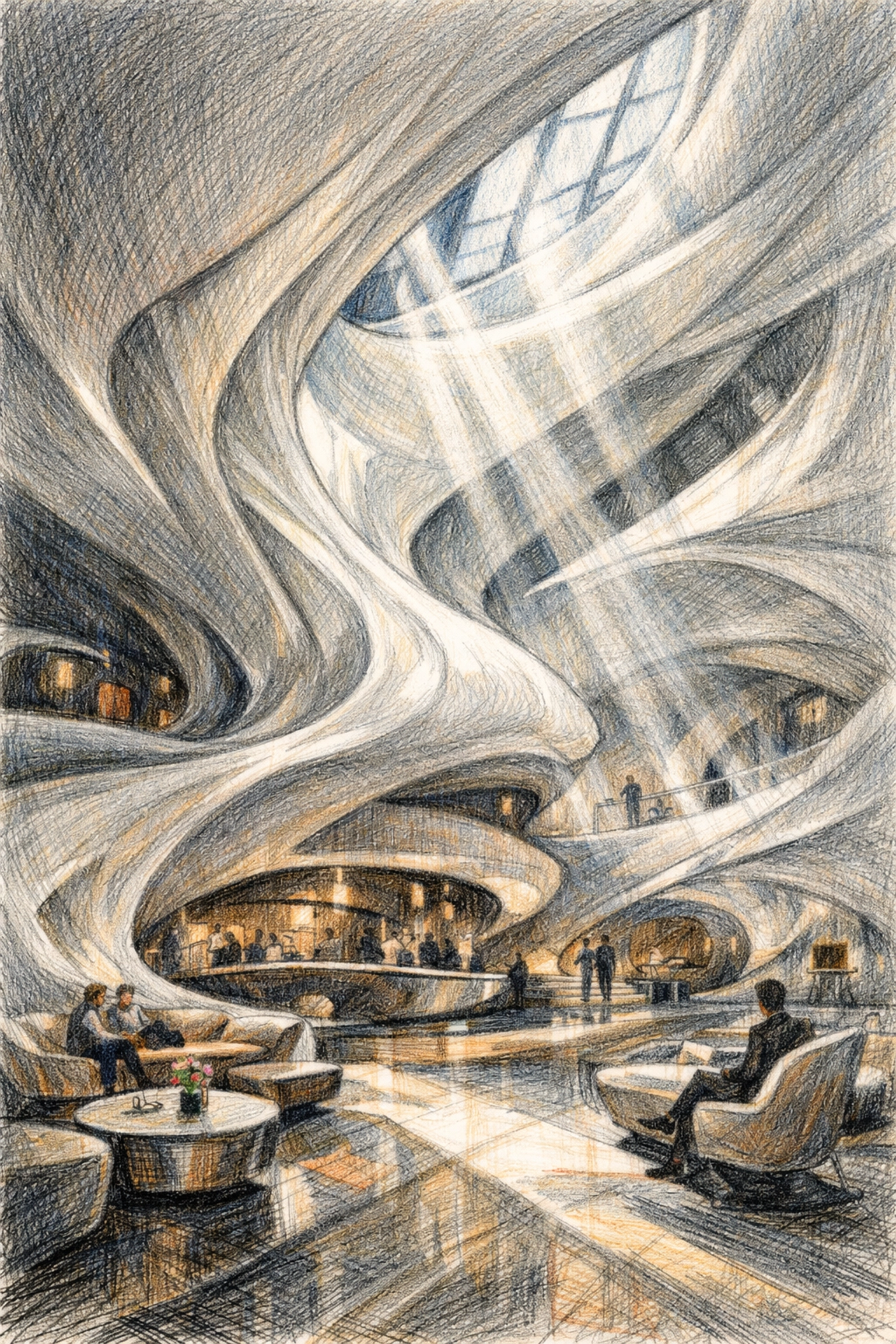
One of the most famous examples of Hadid’s work in the hotel world is her contribution to the Hotel Silken Puerta América in Madrid. She was asked to design an entire floor, and what she delivered was nothing short of revolutionary.
Instead of picking out a bed, a desk, and some chairs, she designed the rooms as monolithic units. The walls literally morphed into the beds, and the desks grew out of the floors. It was all one continuous, molded surface. She used monochromatic palettes: dazzling whites or inky blacks: to make the sculptural shapes stand out.
This is a masterclass in boutique hotel interior design. She proved that a room doesn't have to be a collection of furniture; it can be an immersive environment. When a guest stays in a room like that, they aren't just sleeping in a bed; they are participating in a work of art.
The Lesson: Think about "integration." How can your headboard interact with your side tables? How can your lighting feel like it's part of the wall rather than just an object hanging on it?
3. The Dialogue Between Past and Present: Hotel Romeo Roma
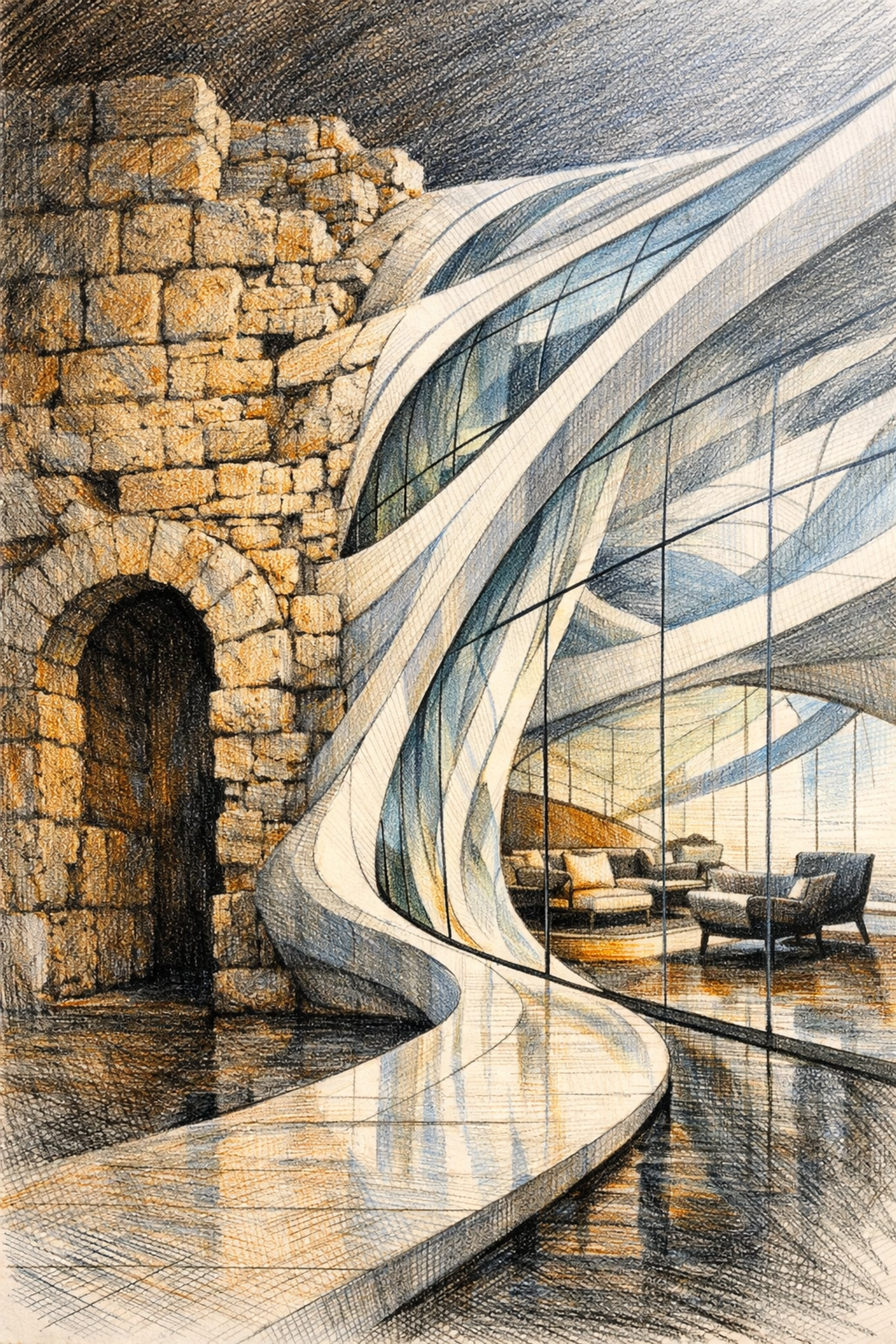
A common misconception about Hadid’s style is that it only works for "new" buildings. But her project at the Hotel Romeo Roma in Rome proves the opposite. This project involved a 16th-century palazzo. You might think a futuristic designer would clash with a historic building, but Hadid’s team handled it with incredible grace.
Instead of covering up the history, they embraced it. They preserved a discovered ancient Roman wall and turned it into an amenity. They used parametric design to reinterpret traditional Italian vaulting. This project required 230 special permits and the collaboration of nearly 50 different companies to get the historical details right.
It shows that luxury hospitality design isn't about ignoring the past; it’s about creating a conversation between the old and the new.
The Lesson: If your property has history, don't hide it. Use modern design elements: like glass, steel, or fluid curves: to highlight the texture of old stone or brickwork.
4. Sustainable Hotel Architecture: The Vertex Hotel
We often talk about "sustainability" as just being about solar panels and low-flow toilets. But for Zaha Hadid, sustainable hotel architecture was about how a building responds to its environment.
For the Vertex Hotel in Okinawa, Japan, her team spent a whole year digitally modeling temperature, wind patterns, humidity, and solar exposure. They didn't just guess where to put the windows; they let the data tell them how the building should be shaped.
The result? A hotel that "floats" 21 feet above the coastline. This wasn't just for looks; it was to minimize the impact on the local ecosystem and preserve biodiversity. By lifting the building, they allowed the natural wind to cool the structure and ensured the ocean views were uninterrupted for every guest.
The Lesson: Sustainability should be part of your design from day one. Consider how the natural light and wind in your location can help you save energy while also making the guest experience more comfortable.
5. Materiality and the "Touch" Factor
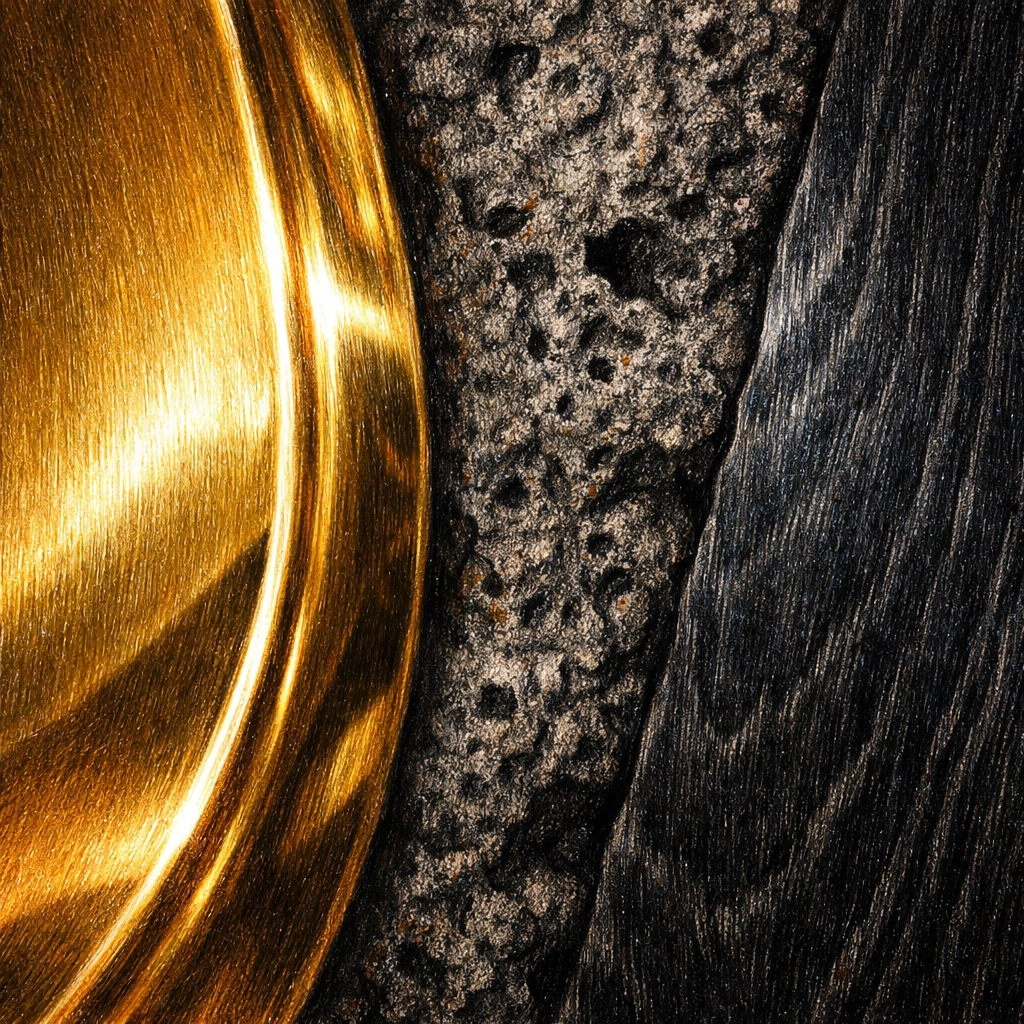
Luxury isn't just about how a place looks; it’s about how it feels. In the House Bar at Home House in London, Hadid used gold, sports-car-like curves that felt incredibly high-end. In Rome, she used lava stone, ebony floors, and Sicilian rock salt.
She understood that the materials you choose tell a story. If you want a space to feel grounded, you use heavy, textured stone. If you want it to feel ethereal, you use translucent plastics or polished metals.
In her designs, the material and the form are inseparable. You don't just "paint" a Hadid building; the color and texture are usually built into the material itself.
The Lesson: Don't treat your finishes as an afterthought. Spend time touching samples. How does the stone feel under a guest's feet? How does the fabric on the lounge chair react to light?
6. How to Apply "The Zaha Method" to Your Project
You might be thinking, "Robert, I don't have the budget of a billionaire or a team of 400 architects." That’s fair! But you can still use the core principles of her work to elevate your hotel.
Focus on Fluidity
In your lobby, try to avoid "stop and start" design. Use rugs, ceiling treatments, or curved partitions to guide guests from the entrance to the check-in desk naturally.
Create a "Hero" Element
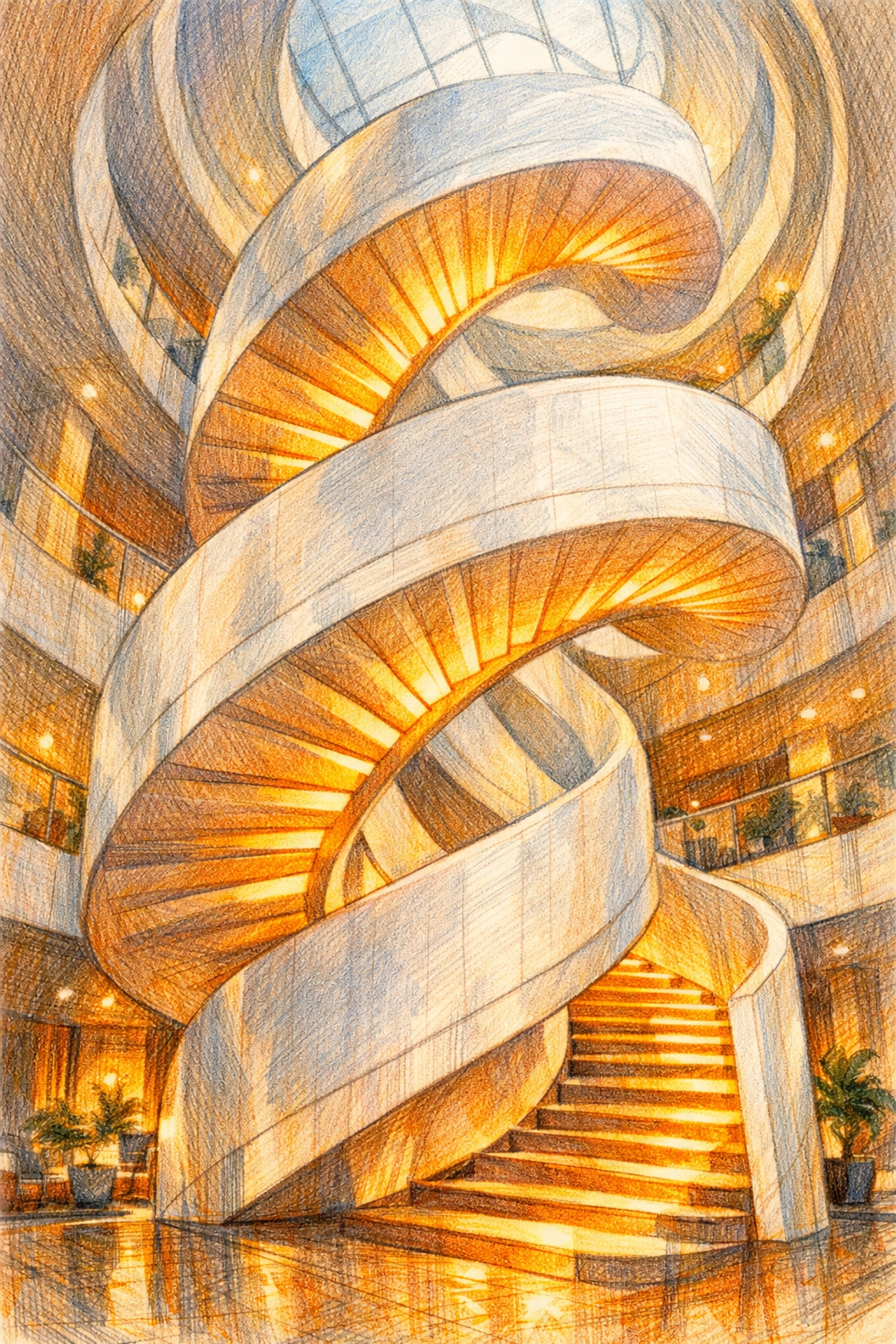
Zaha’s buildings often had one massive, breathtaking feature: like a grand staircase or a soaring atrium. In a boutique hotel, this could be a custom-designed reception desk that looks like a piece of sculpture, or a dramatic light installation in the dining room.
Prioritize the Guest Journey
Hadid’s designs were never just about a pretty facade. They were about how people moved through the space. Ask yourself: What is the first thing my guest sees? How do they feel when they walk into the bathroom? Every "touchpoint" is an opportunity for design.
Wrapping It Up
Zaha Hadid changed the way we think about luxury hospitality design. She showed us that hotels don't have to be boring, that history and the future can live together, and that sustainable hotel architecture can be incredibly beautiful.
Her legacy is a reminder to all of us in the hospitality industry: don't be afraid to take risks. Your guests aren't just looking for a place to sleep; they are looking for a story to tell. By using fluid forms, respecting your local context, and being obsessed with the details of your materials, you can create a hotel that stands the test of time.
If you’re looking to bring some of this "signature style" to your next project, remember to start with the "why" before you get to the "what." Why do you want your guests to feel a certain way? Once you know that, the curves will follow.
Thanks for reading! If you found this helpful, feel free to check out our other guides on boutique hotel interior design. Catch you in the next one!