If you’ve ever walked into a building and felt like you stepped onto a movie set from the year 2100, there is a good chance you were standing in a Zaha Hadid masterpiece.
In the world of architecture and luxury hospitality design, Zaha Hadid wasn’t just a name; she was a force of nature. Known as the "Queen of the Curve," Hadid spent her career challenging the very idea of what a building should look like. She famously said, "There are 360 degrees, so why stick to one?" This philosophy didn't just change skylines; it completely flipped the script on how we experience hotels.
At My Hotel Design, we’re obsessed with how space impacts the guest experience. When we look at Hadid’s work, we see more than just "cool buildings." We see a blueprint for the future of luxury hospitality: one that prioritizes flow, emotion, and a bold rejection of the boring old "box" hotel.
The Philosophy: Why "Normal" Wasn’t Good Enough
To understand Hadid’s impact on luxury hospitality design, you first have to understand her disdain for the right angle. Most hotels are built as a series of stacked boxes. It’s efficient, sure, but it’s rarely inspiring.
Hadid pioneered "Parametricism." Without getting too lost in the technical weeds, this approach uses complex algorithms to create fluid, sweeping forms that mimic nature rather than geometry textbooks. Think of the way water flows around a stone or how wind shapes a sand dune.
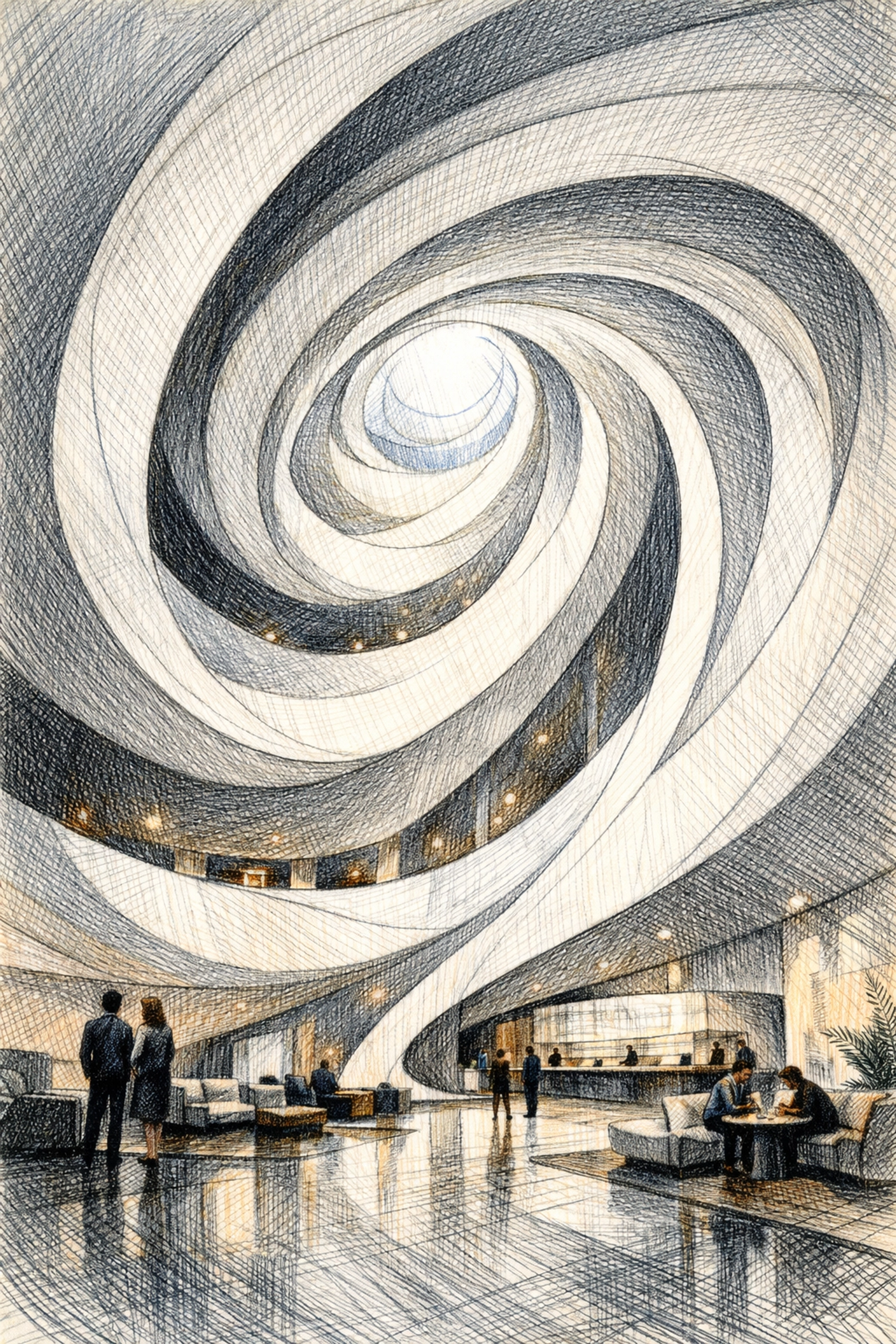
In a boutique hotel interior design context, this translates to spaces that feel alive. Instead of a lobby being a room with four walls and a desk, a Hadid-designed lobby is a continuous landscape. Walls melt into ceilings; floors curve up to become seating. This fluidity creates a sense of discovery: you don't just walk through her hotels; you navigate them.
Landmark Projects That Changed the Game
While Hadid’s portfolio spans everything from opera houses to stadiums, her hotel projects are where her vision for "living art" truly shines. Here are a few that every design enthusiast needs to know.
1. ME Dubai (The Opus)
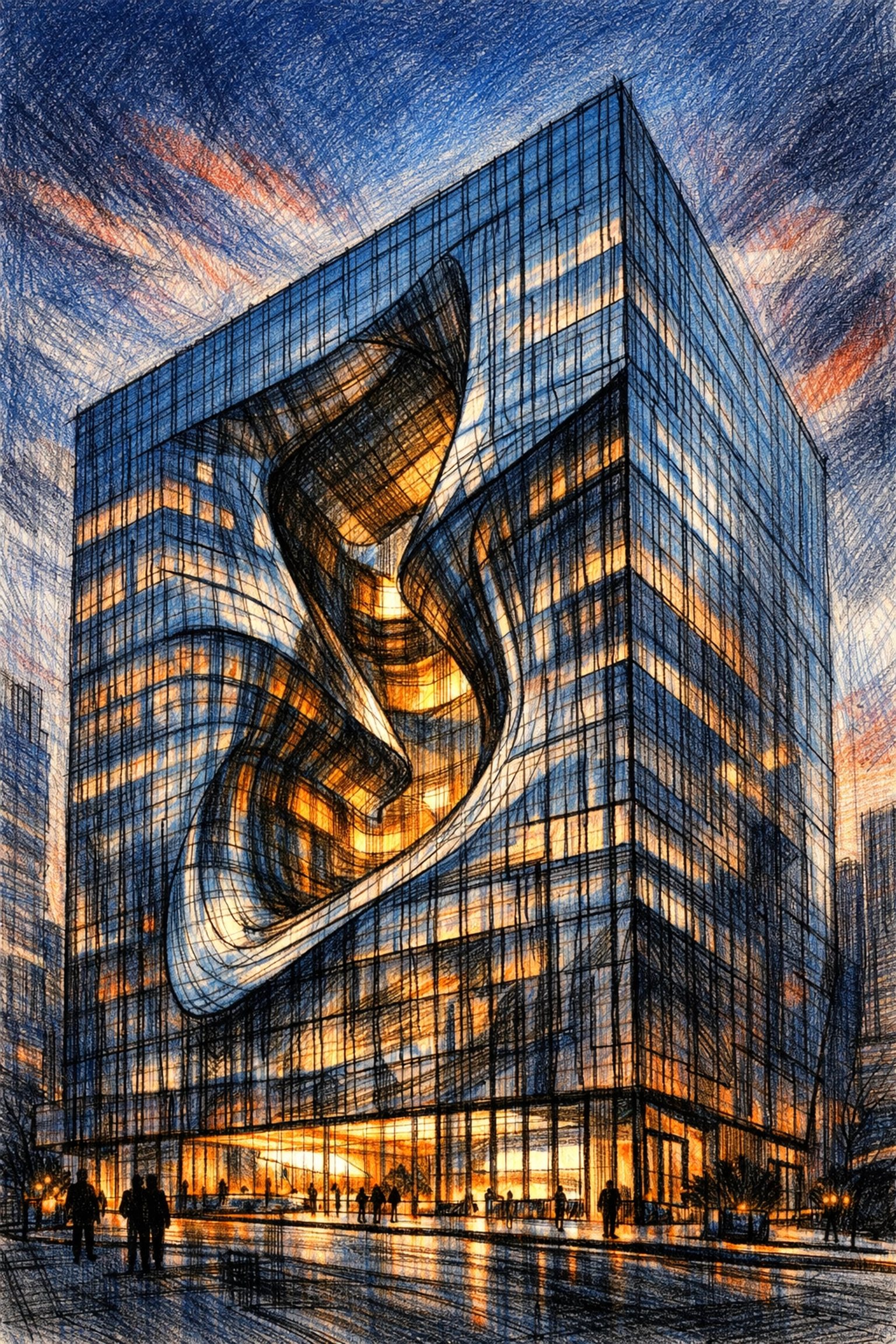
This is a big one. The Opus is the only hotel in the world where Zaha Hadid designed both the architecture and the interiors. Located in Dubai’s Burj Khalifa district, the building looks like a giant cube with a jagged, fluid void carved out of its center.
Inside, the boutique hotel interior design is nothing short of breathtaking. The furniture looks like it was grown in a lab rather than built in a factory. The pods, the curved beds, and the monochromatic color palettes create an atmosphere that feels both incredibly high-end and slightly alien. It’s a masterclass in how to balance "solid and void," creating spaces that feel intimate despite their massive scale.
2. Morpheus Hotel (Macau)
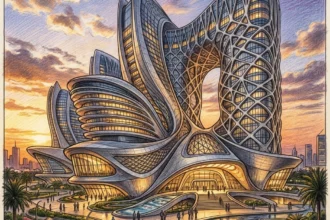
If you want to see what sustainable hotel architecture looks like when pushed to its structural limits, look at Morpheus. Named after the Greek god of dreams, this 40-story luxury hotel is wrapped in the world’s first free-form exoskeleton.
Drawing inspiration from traditional Chinese jade carvings, the building features three "holes" in its center that create a series of bridges and unique interior views. By putting the support structure on the outside, Hadid’s team was able to create massive, uninterrupted internal spaces. For the guest, this means soaring atriums and a sense of verticality that you simply don't find in traditional luxury hotels.
3. Hotel Romeo Roma
One of Hadid’s final projects, completed after her passing in 2016, is a perfect example of how her futuristic style can live alongside history. Set in a 16th-century palazzo in Rome, this 74-room hotel is a "dialogue" between the old and the new.
Imagine walking past Renaissance-era frescoes only to turn a corner and see a parametric, high-tech installation. It’s a bold move, but it works because it treats history with respect while refusing to be stuck in the past. This project required over 230 special permits, proving that even the most rigid historical contexts can be updated with cutting-edge design if the vision is strong enough.
Redefining Boutique Hotel Interior Design
What can independent owners and designers learn from Hadid? You don't need a billion-dollar budget to take a leaf out of her book. The core of her interior style was about integration.
In many hotels, the furniture is an afterthought: something you buy from a catalog and "place" in a room. In a Hadid interior, the furniture is part of the architecture.
- Monochromatic Palettes: She often used single colors to emphasize shape and form rather than distracting the eye with busy patterns.
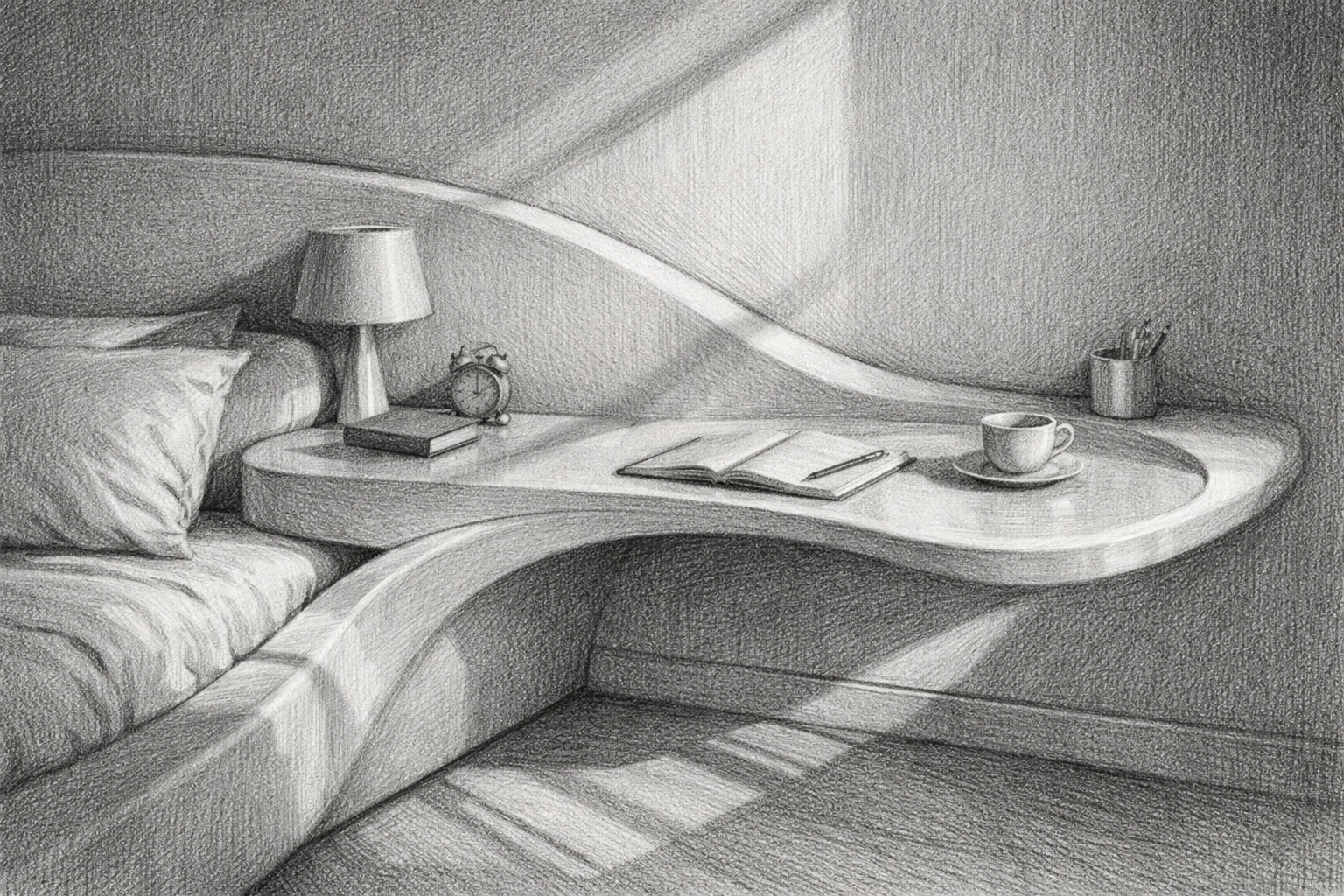
- Molded Units: Instead of a separate bed frame, nightstand, and desk, her designs often featured a single, molded piece of material that performed all three functions.
- Lighting as Sculpture: Lighting wasn't just about visibility; it was used to highlight the curves of the room, often hidden in recessed "coves" that made the ceiling look like it was floating.
Sustainable Hotel Architecture: The New Legacy
A common criticism of high-concept architecture is that it’s wasteful. However, Zaha Hadid Architects (ZHA) has been at the forefront of proving that "futuristic" can also mean "responsible."
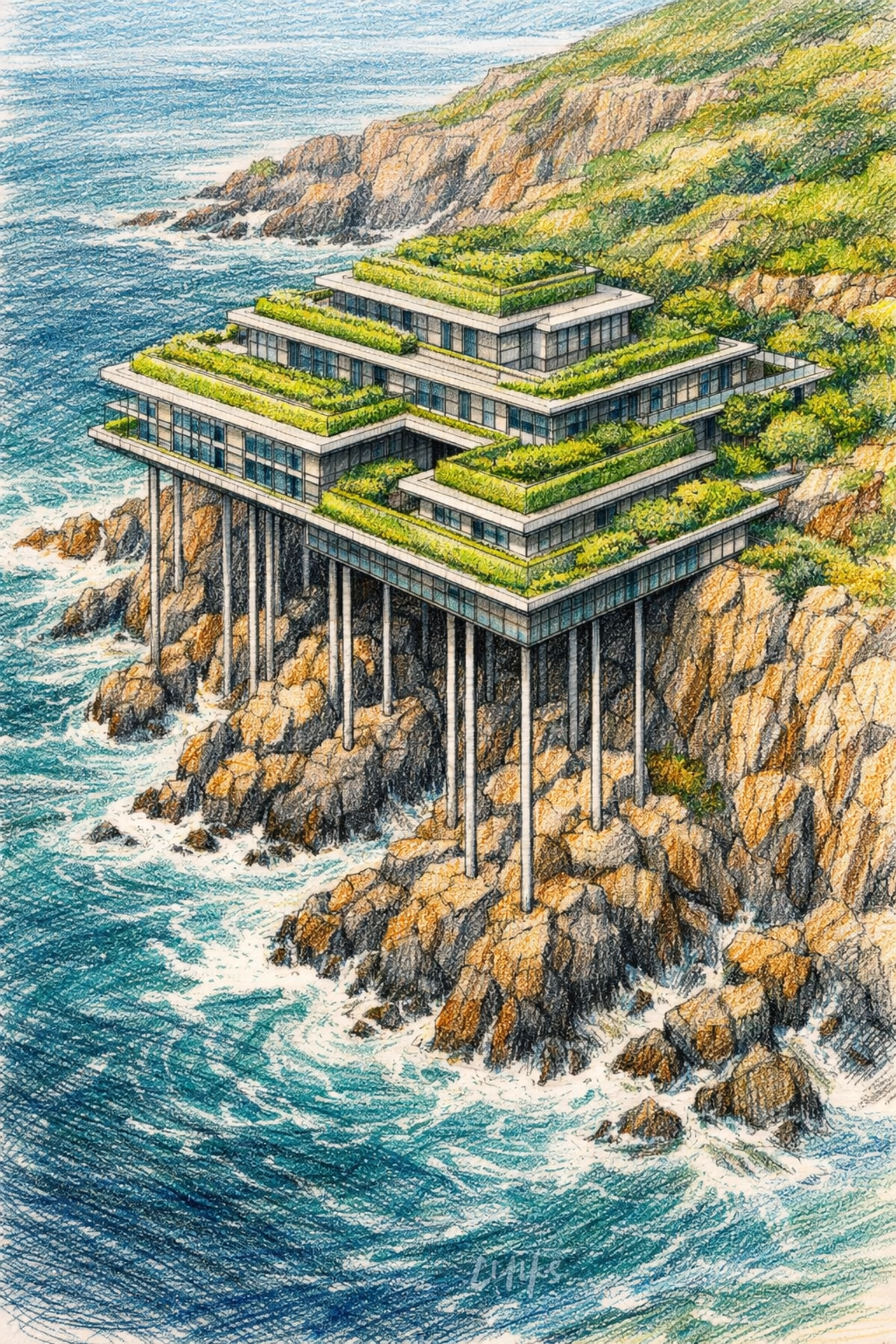
Take the Vertex Hotel in Okinawa, Japan. This project demonstrates a deep commitment to sustainable hotel architecture. Rather than digging into the coastline and destroying the local ecosystem, the hotel is designed to "float" above the landscape on stilts. It’s elevated 21 feet above the high-water line to account for storm surges and is engineered to survive the region’s typhoons and seismic activity.
The design uses stepped terraces and gardens to mimic the natural topography, preserving biodiversity while giving guests a front-row seat to nature. This shows that luxury hospitality design in the modern era isn't just about gold faucets and silk sheets; it’s about creating a harmonious relationship between the building and the planet.
The "Hadid Effect" on the Hospitality Industry
Zaha Hadid’s influence goes far beyond the buildings she actually finished. She changed the "expectation" of luxury.
Before Hadid, luxury usually meant "traditional." It meant heavy drapes, dark wood, and gold leaf. Hadid showed the world that luxury could be clean, white, fluid, and technologically advanced. She proved that "minimalism" didn't have to be boring: it could be incredibly dramatic.
Today, we see her influence in everything from the curvature of modern cruise ships to the lobby designs of independent boutique hotels. She gave architects the permission to be brave.
Bringing the Vision to Your Project
At My Hotel Design, we talk to a lot of founders who want to create something "iconic." While we can't all build 40-story exoskeletons in Macau, we can all adopt the Hadid mindset:
- Don't Fear the Curve: Even a curved reception desk or a rounded hallway can break the monotony of a standard hotel layout.
- Focus on the Flow: Think about how a guest moves from the entrance to the elevator. Is it a series of stops and starts, or is it a fluid journey?
- Materials Matter: Hadid loved using "innovative" materials like Corian, glass-reinforced concrete, and lava stone. Look for materials that allow for seamless finishes.
Final Thoughts
Zaha Hadid didn't just design hotels; she designed experiences. She understood that when people travel, they want to be transported: not just to a different city, but to a different state of mind.
Whether it's the soaring heights of the Morpheus or the intimate, high-tech rooms of the Silken Puerta América in Madrid, her work remains the gold standard for luxury hospitality design. She proved that architecture could be art, and that art could be a place where you spend the night.
The legacy of Zaha Hadid continues to inspire us at My Hotel Design to push the boundaries of what a hotel can be. If you're looking to redefine your space, remember: you don't have to stick to the 90-degree angle. There’s a whole 360 degrees out there waiting for you.
Want to learn more about how to bring world-class design to your boutique hotel? Check out our other guides on sustainable architecture and modern interior trends here on the My Hotel Design blog.