If you’ve ever walked into a hotel and felt like you’ve seen it a thousand times before: the same beige walls, the same square rooms, the same predictable lobby: you aren’t alone. For decades, the hospitality industry was built on the idea of the "predictable box." It was safe, it was efficient, and, let’s be honest, it was a bit boring.
Then came Zaha Hadid.
Known as the "Queen of the Curve," Hadid didn't just design buildings; she designed movements. While she’s famous for massive stadiums and museums, her impact on luxury hospitality design is where her legacy gets really personal. She didn't just want you to stay in a room; she wanted you to inhabit a piece of art.
At My Hotel Design, we’re obsessed with how spaces make people feel. Today, we’re taking a deep dive into how Zaha Hadid’s radical vision continues to reshape the world of boutique hotel interior design and why her approach is the blueprint for the future of travel.
Breaking the "Box" Mentality
In the old days of hotel development, efficiency was king. Architects used "cellular organization": a fancy way of saying they stacked identical rectangular rooms on top of each other like LEGO bricks. It made sense for the budget, but it did nothing for the soul.
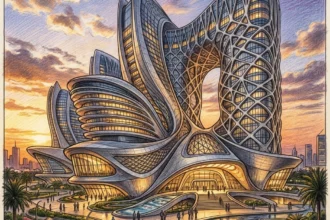
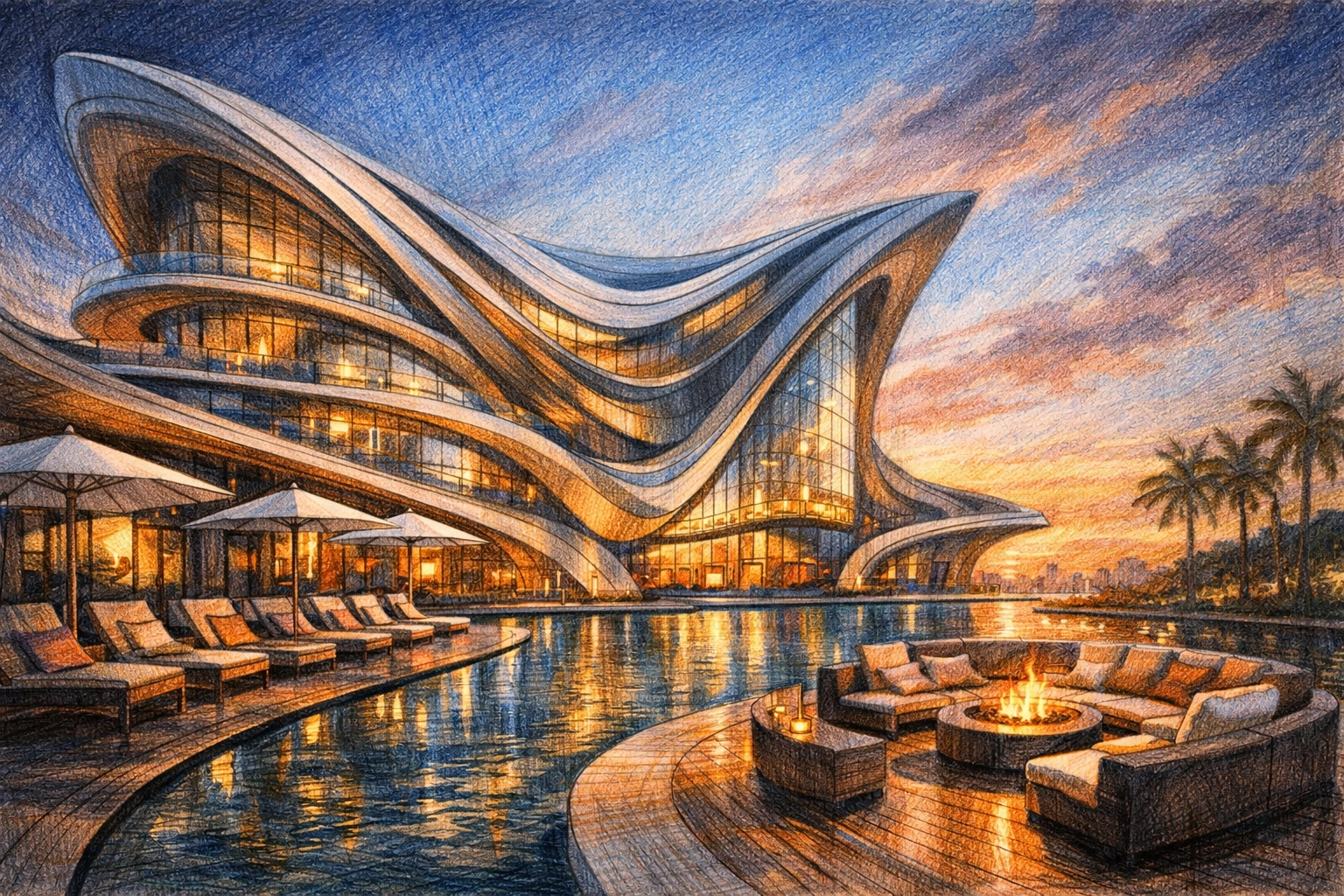
Zaha Hadid Architects (ZHA) flipped this script. Instead of starting with a grid, they started with flow. Hadid’s work is characterized by "parametricism": a style where complex geometries and curving lines aren't just decorative; they are the structure itself.
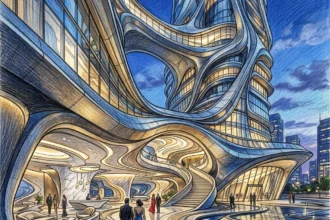
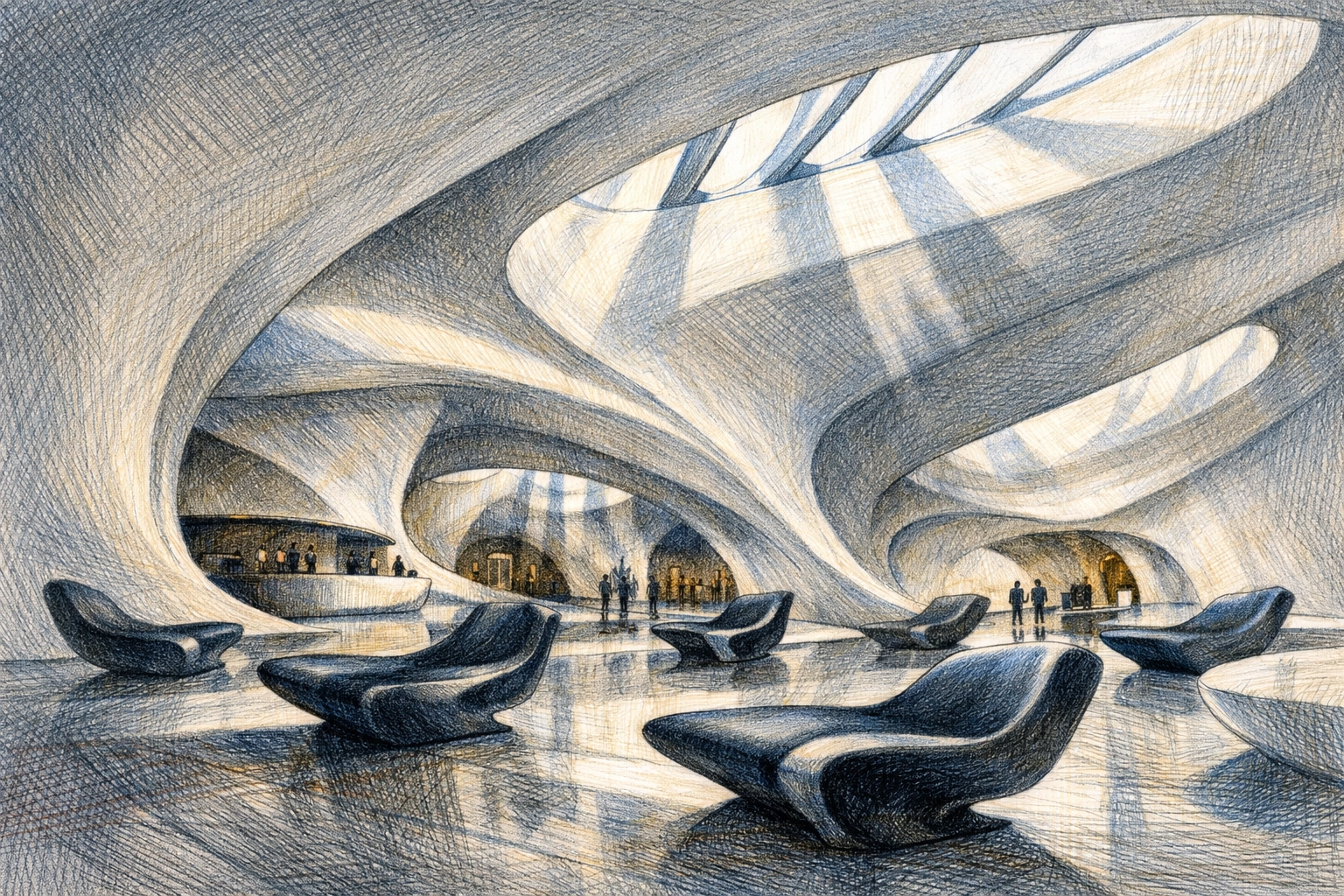
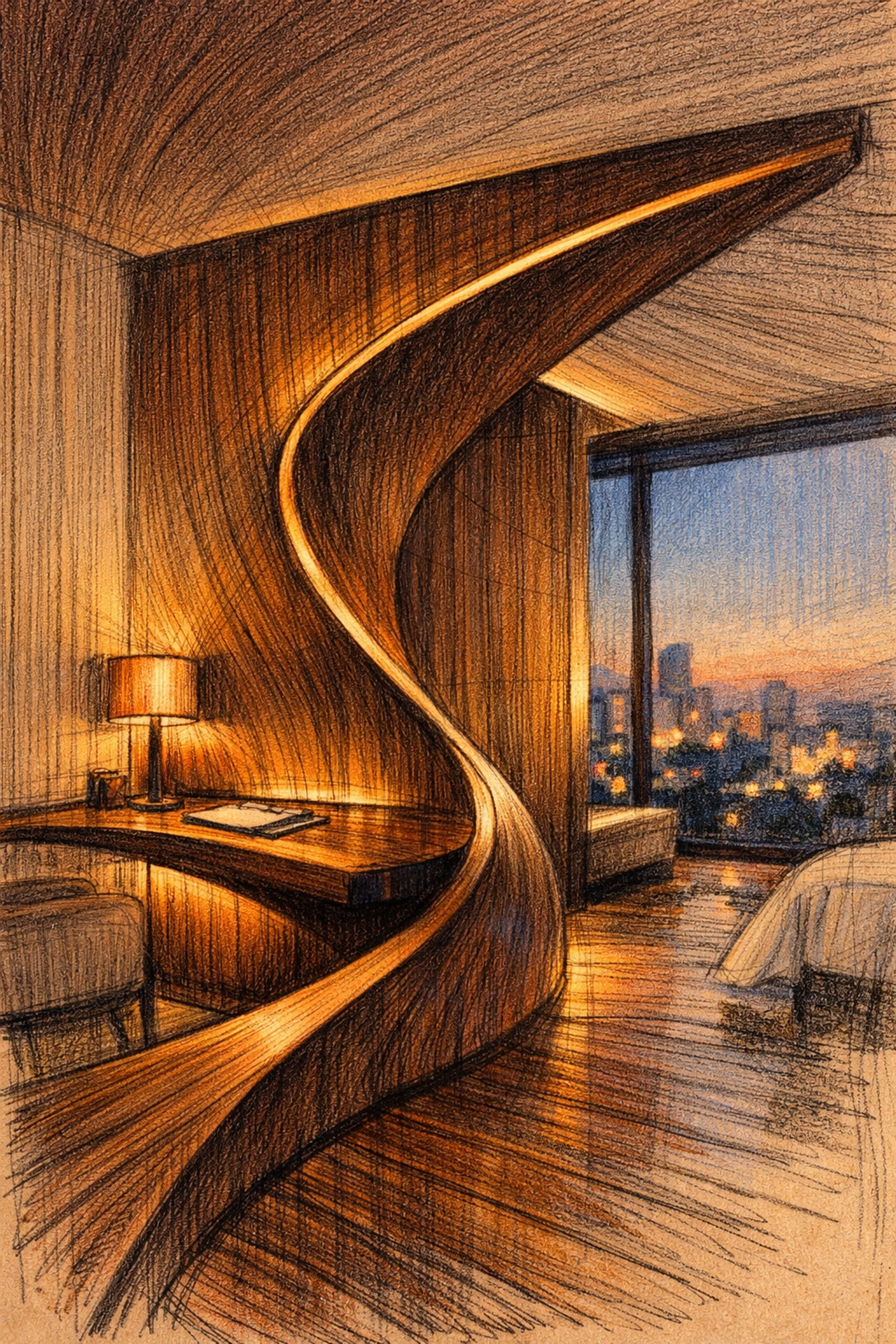
When you walk into a ZHA-designed hotel, the walls don't just meet at 90-degree angles. They melt into the ceiling. The floor might curve up to become a bench. This fluidity removes the psychological barriers we usually feel in a rigid building. It makes the space feel organic, like something grown rather than something manufactured. This shift is a cornerstone of modern luxury hospitality design. It’s about moving away from the industrial and toward the individual.
The Power of the "Signature"
There’s a beautiful concept in Italian design called disegno. It’s where the word for "design" and "sign" share the same root. It implies that a design should be the "signature" of the artist.
In the world of boutique hotel interior design, this is everything. Travelers today aren't looking for a "brand standard." They are looking for an experience they can’t get anywhere else. Hadid understood this better than anyone. She treated every hotel project as a unique artistic expression.
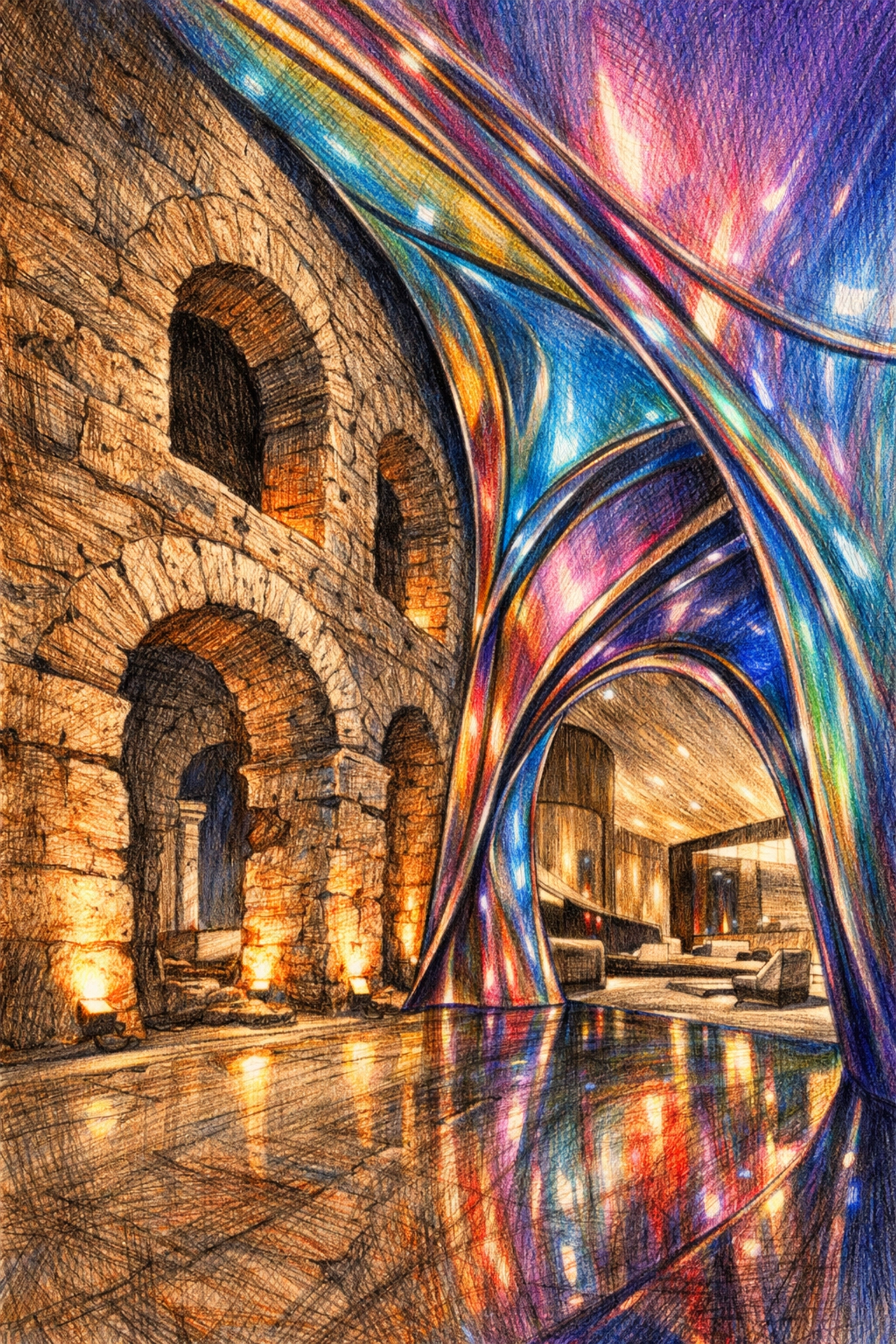
Take her work on the Romeo Hotel Roma, for example. Instead of following a template, the design team embraced an "unexpected patchwork." They combined iridescent archways and anthropomorphic paneling with historical context. It’s bold, it’s a bit wild, and it’s completely unmistakable. You know exactly where you are the moment you step through the door.
Case Study: Romeo Hotel Roma – Where History Meets the Future
One of the biggest challenges in luxury hospitality design is dealing with history. How do you create something futuristic in a city as ancient as Rome?
Most designers would play it safe: maybe add some marble and call it a day. ZHA took a different route. During the construction of the Romeo Hotel Roma, an ancient Roman wall was exhumed. Instead of covering it up or working around it, they integrated it into the very fabric of the hotel’s amenities.
This is a masterclass in modern architecture. By preserving the ancient wall and surrounding it with Hadid’s signature curving, ultra-modern forms, they created a dialogue between the past and the future. It’s not just a hotel; it’s a living museum. This approach shows that true luxury isn't about ignoring the past: it’s about framing it in a way that feels fresh and relevant.
Case Study: Vertex Hotel Okinawa – Architecture That Breathes
When we talk about sustainable hotel architecture, we often think of solar panels and recycled wood. While those are important, Hadid’s legacy introduces another layer to sustainability: harmony with the landscape.
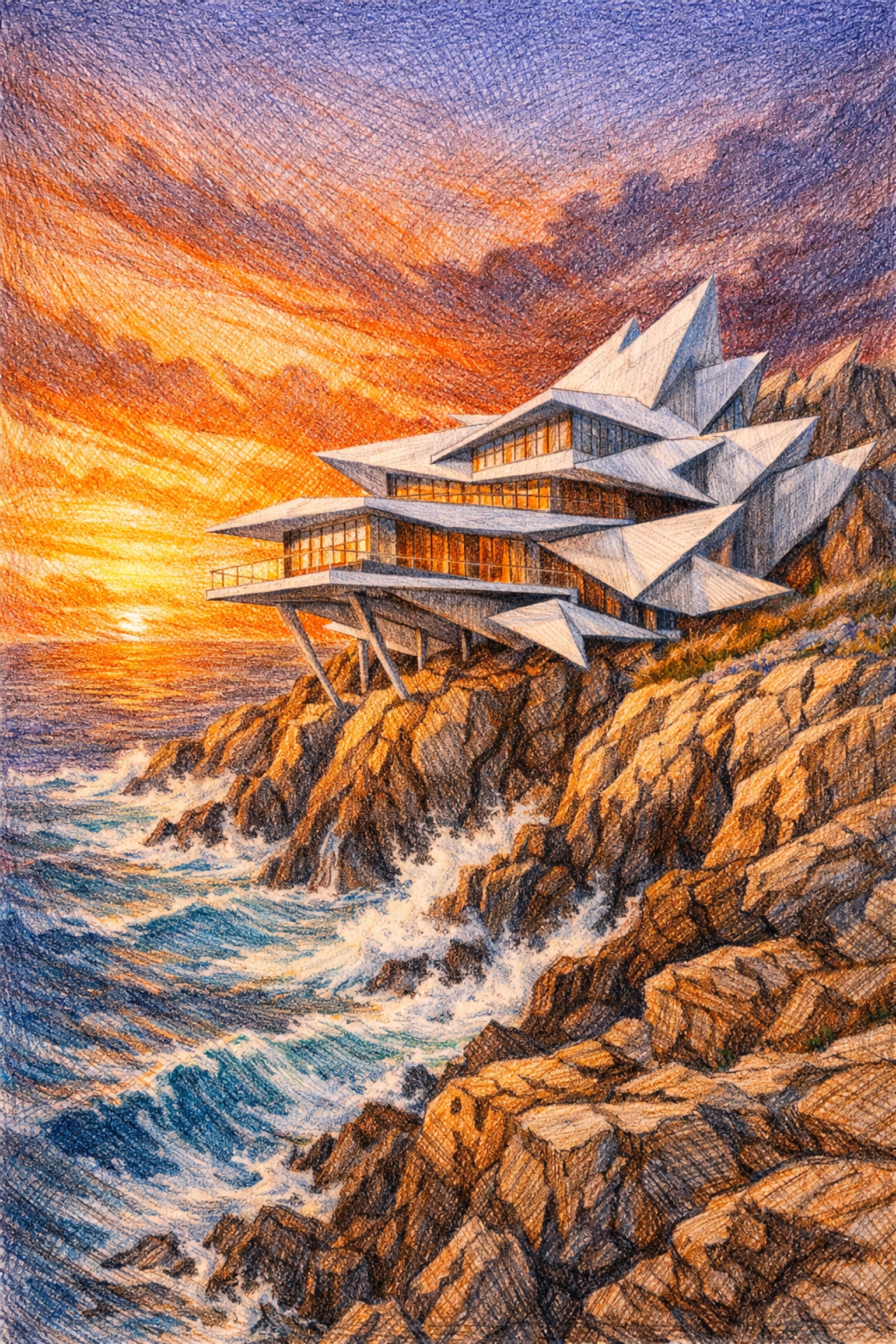
The Vertex Hotel in Okinawa is a stunning example of this. The building appears to "float" above the landscape. Its sharp, angular forms mimic the jagged rocks of the coastline, while the interior remains fluid and soft.
By designing buildings that respond to their specific environment, ZHA creates structures that feel like they belong to the earth rather than being imposed upon it. This "site-specific" design is the ultimate form of luxury. It tells the guest that this building could only exist right here, right now. That sense of place is what modern travelers crave.
Why This Matters for Boutique Hotels
You might be thinking, "That’s great for multi-million dollar projects, but what about smaller boutique hotels?"
The truth is, Hadid’s influence has trickled down to every level of boutique hotel interior design. She proved that guests are ready for something different. She gave other designers the "permission" to be bold.
Here are a few ways her legacy is changing the way we see boutique spaces:
- Furniture as Sculpture: We’re seeing more hotels move away from standard furniture. Think undulating bed frames, desks that grow out of walls, and lighting fixtures that look like alien life forms.
- The End of the Lobby: The traditional "check-in desk" is dying. Following Hadid’s lead, lobbies are becoming fluid social hubs where the architecture guides you from the bar to the lounge without a single "stop" sign.
- Material Innovation: Hadid loved playing with light and texture. Today’s luxury hotels are using iridescent materials, 3D-printed features, and high-tech composites to create sensory experiences that go beyond just "looking good."
The Future of Luxury Hospitality Design
The legacy of Zaha Hadid isn't just about pretty curves. It’s about a fundamental shift in how we value space. We are moving away from the era of "functional luxury" (where things are just expensive) and into the era of "experiential luxury" (where things are meaningful).
As we look toward the future of sustainable hotel architecture, the lessons from ZHA are clear: don't be afraid to innovate, respect the history of your location, and always, always design for the human experience.
At My Hotel Design, we believe that every hotel has a story to tell. Whether you’re building a 200-room resort or a 10-room boutique hideaway, the goal is the same: to create a space that stays with the guest long after they’ve checked out.
Zaha Hadid showed us that a building can be more than just a place to sleep. It can be a dream you can walk through. And in the world of hospitality, there’s nothing more luxurious than that.
Final Thoughts from Robert Rupp
When I look at the work ZHA is doing today, long after Zaha’s passing, I’m reminded that great design is timeless because it challenges us. It asks us to look at the world differently. In our industry, it’s easy to get caught up in the "rules" of what a hotel should be. But if Zaha taught us anything, it’s that the best designs happen when you throw the rulebook out the window and start with a single, beautiful curve.
Luxury isn't a price point. It’s a perspective. And thanks to Zaha Hadid, that perspective is looking more exciting than ever.
Want to bring a touch of bold, modern design to your next project? At My Hotel Design, we specialize in helping hospitality brands create spaces that stand out. Reach out to us today and let's build something extraordinary.