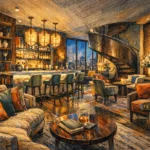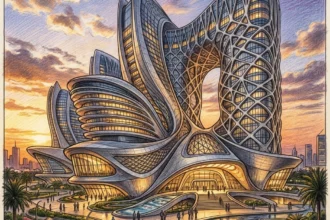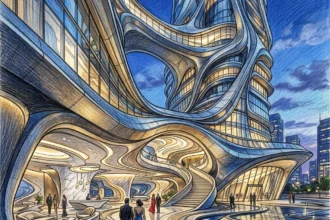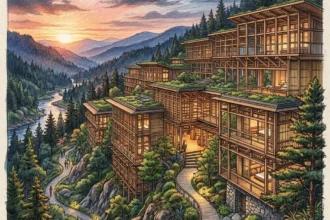
If you’ve ever walked into a space that felt less like a building and more like a living, breathing organism, chances are you were standing inside a Zaha Hadid creation. In the world of luxury hospitality design, Hadid wasn't just an architect; she was a disruptor who threw the rulebook out the window: and then redesigned the window into a fluid, gravity-defying curve.
At My Hotel Design, we’re constantly looking at the giants of the industry to see what we can learn. I’m Robert Rupp, and today I want to pull back the curtain on the "Queen of the Curve." While many experts talk about her "signature style," there are specific strategies she used to redefine what a hotel could be. Whether you are looking into boutique hotel interior design or planning a massive resort, Hadid’s approach offers a masterclass in pushing boundaries.
The Secret of the "Non-Box"
For decades, hotel design followed a very predictable pattern: boxes. You had square rooms, rectangular lobbies, and perpendicular corridors. It was efficient, sure, but it was also a bit boring. Zaha Hadid Architects (ZHA) changed the game by proving that "fluid geometry" could be functional.
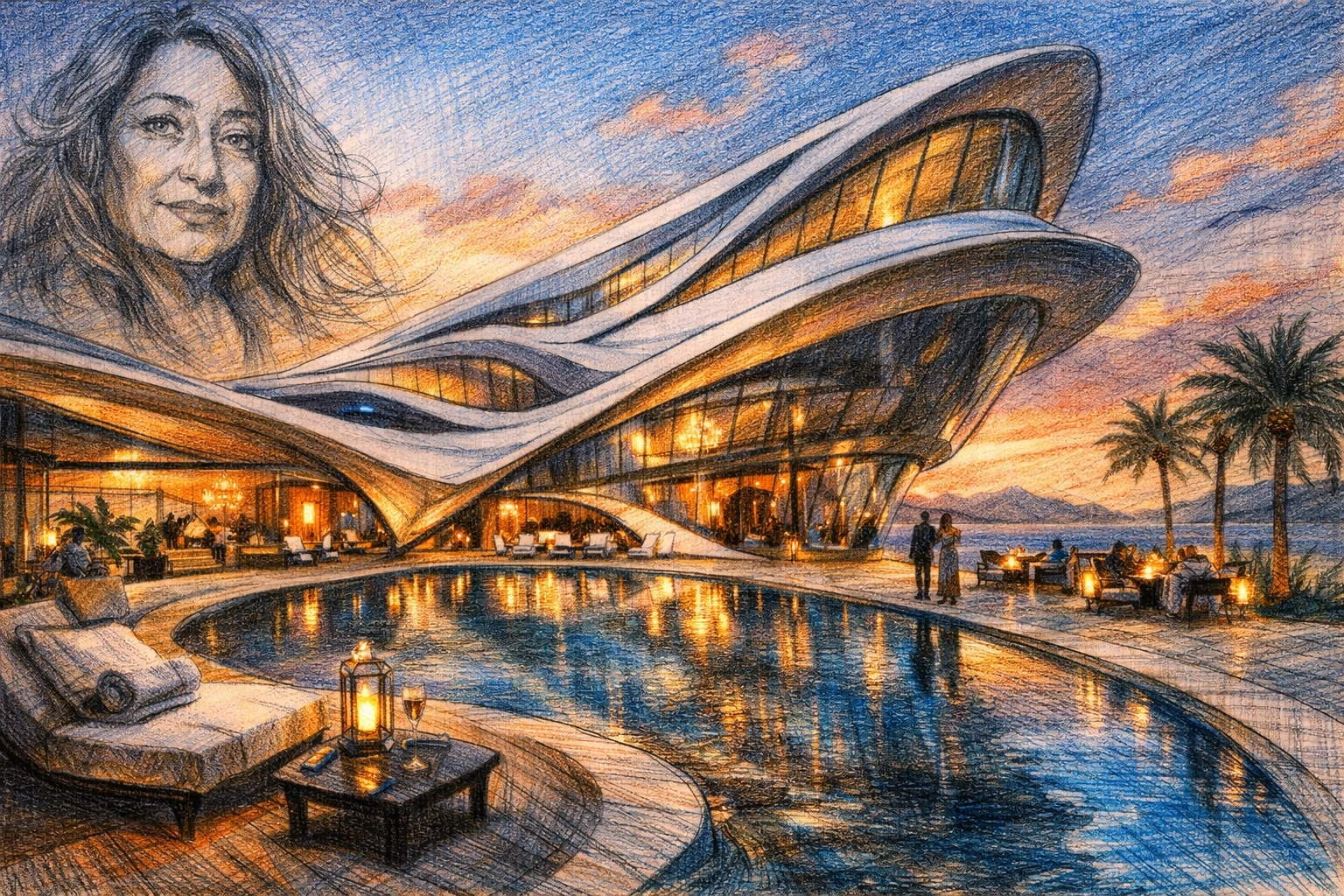
Take the ME Dubai hotel, located in the iconic Opus building. It is famously the only hotel in the world where Hadid designed both the exterior and the interior. The "secret" here isn't just that it looks cool: it’s that there isn’t a single perpendicular wall in the entire place.
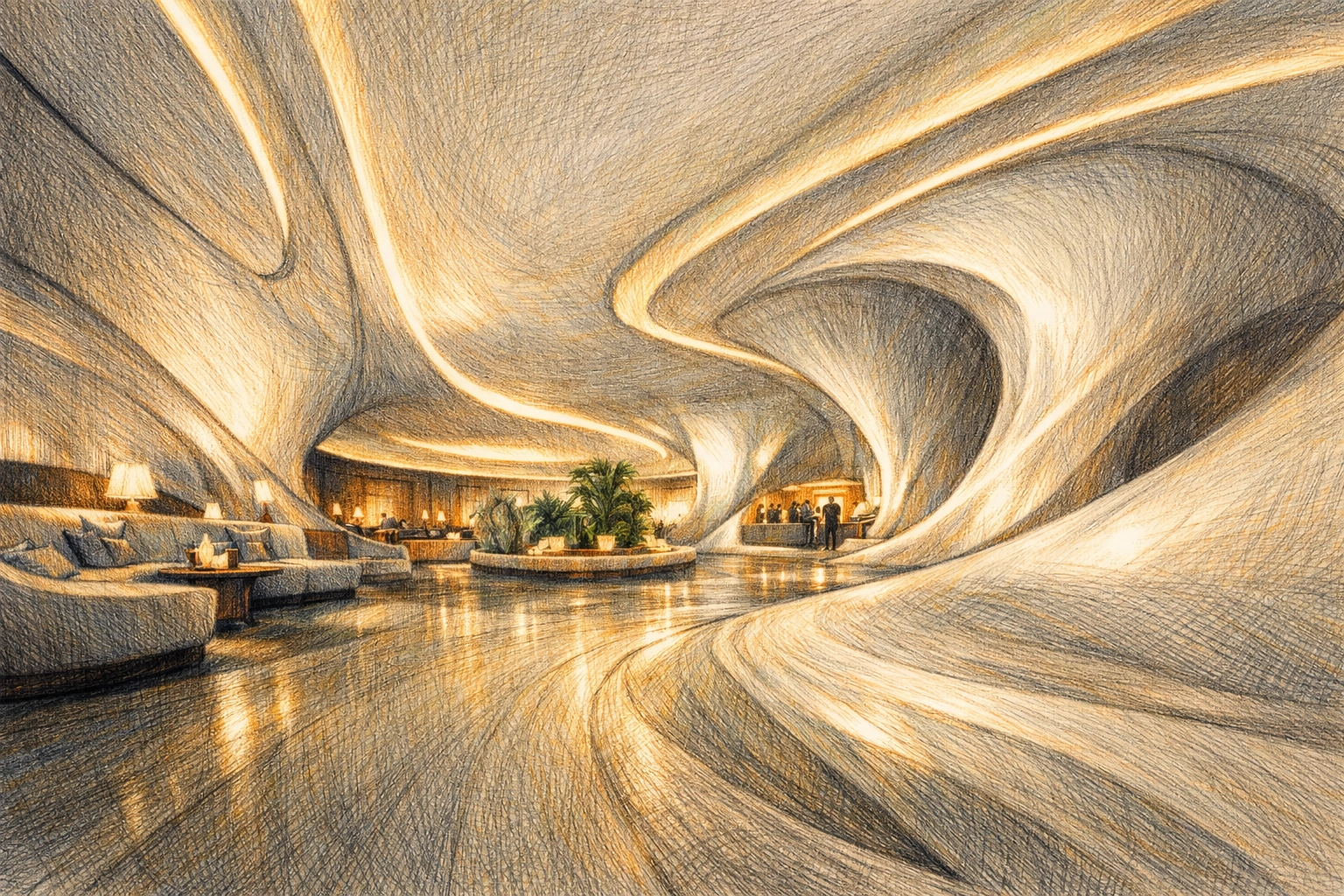
By removing the standard right angle, Hadid created a sense of constant motion. When you’re in a space where the floor flows into the wall and the wall curves into the ceiling, your brain stops looking for the "end" of the room. This creates an illusion of infinite space, a hallmark of high-end luxury hospitality design.
Parametricism: The High-Tech Tool Behind the Art
A common misconception is that Hadid just sat down and sketched these wild shapes by hand. While she was a brilliant artist, the real secret to her success was "Parametricism."
Essentially, this is using advanced computational algorithms to design buildings. Instead of drawing a shape, her team would input variables: like sunlight, wind patterns, and structural loads: and the computer would generate the most efficient, fluid form possible.
In terms of sustainable hotel architecture, this is huge. For the Vertex Hotel in Okinawa, ZHA spent a year digitally modeling environmental factors like humidity and rainfall before they even broke ground. The resulting shape wasn't just for show; it was designed to naturally cool the building and withstand local weather patterns. It proves that luxury and sustainability don't have to be at odds; they can be integrated through smart technology.
Total Design Control: The Boutique Hotel Philosophy
One thing that "experts" often overlook when discussing Hadid is her commitment to "Gesamtkunstwerk," or a total work of art.
In many luxury hospitality design projects, an architect builds the shell, and then an interior designer comes in to pick out the furniture. Hadid hated this. She believed that every element: from the lobby desk to the bathroom sink: should be part of the same DNA.
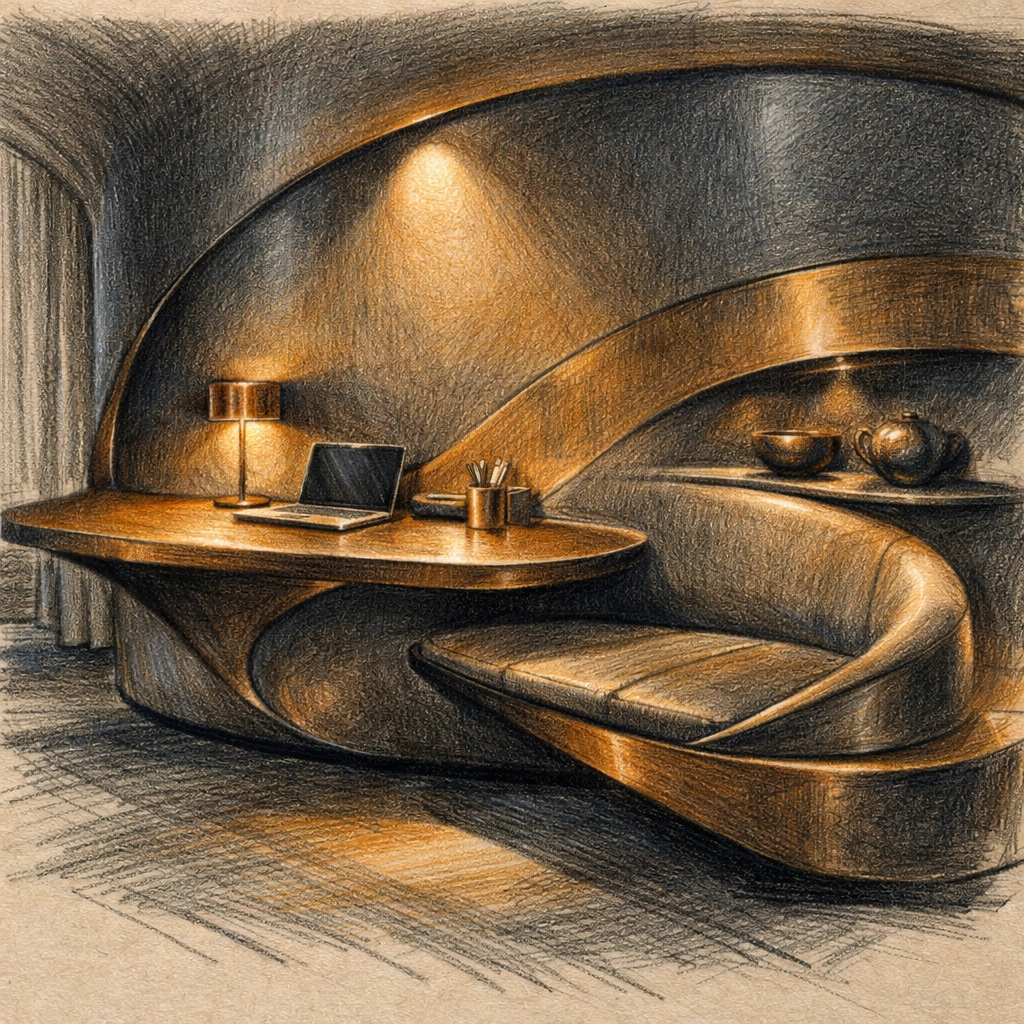
At the ME Dubai, she didn't just pick out nice furniture; she designed it. The beds, the lighting, and even the door handles are custom-made to match the building's fluid lines. This level of detail is something we often see in boutique hotel interior design, where the goal is to create a unique, immersive world for the guest. If the room feels like it was grown rather than built, the guest feels like they are part of something exclusive.
Creating "Micro-Enclaves" in Social Spaces
In a typical luxury hotel, the lobby is often a vast, echoing space that feels a bit cold. Hadid’s secret for large-scale hotels was the creation of "micro-enclaves."
She used her signature curves to carve out intimate spaces within larger rooms. In the ME Dubai atrium, the sweeping mezzanine balconies aren't just there for the view; they create natural pockets where guests can sit and feel private while still being part of the social energy of the hotel.
For anyone working on boutique hotel interior design, the takeaway is clear: you don't need walls to create privacy. You can use furniture shapes, lighting channels, and floor levels to guide people into "zones" of activity. It makes a large hotel feel human-scaled and a small hotel feel complex and layered.
The Influence of the Exoskeleton: The Morpheus Hotel
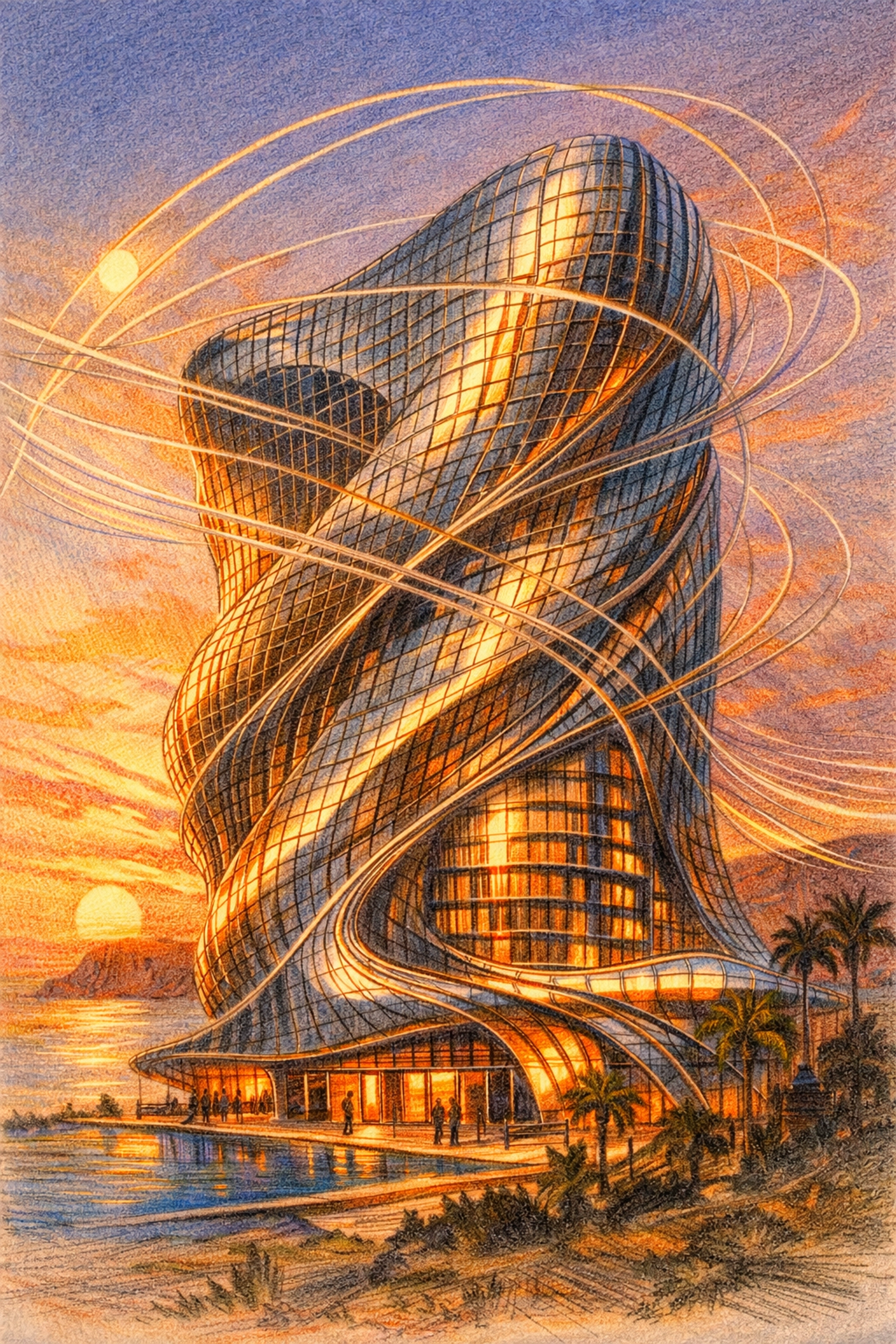
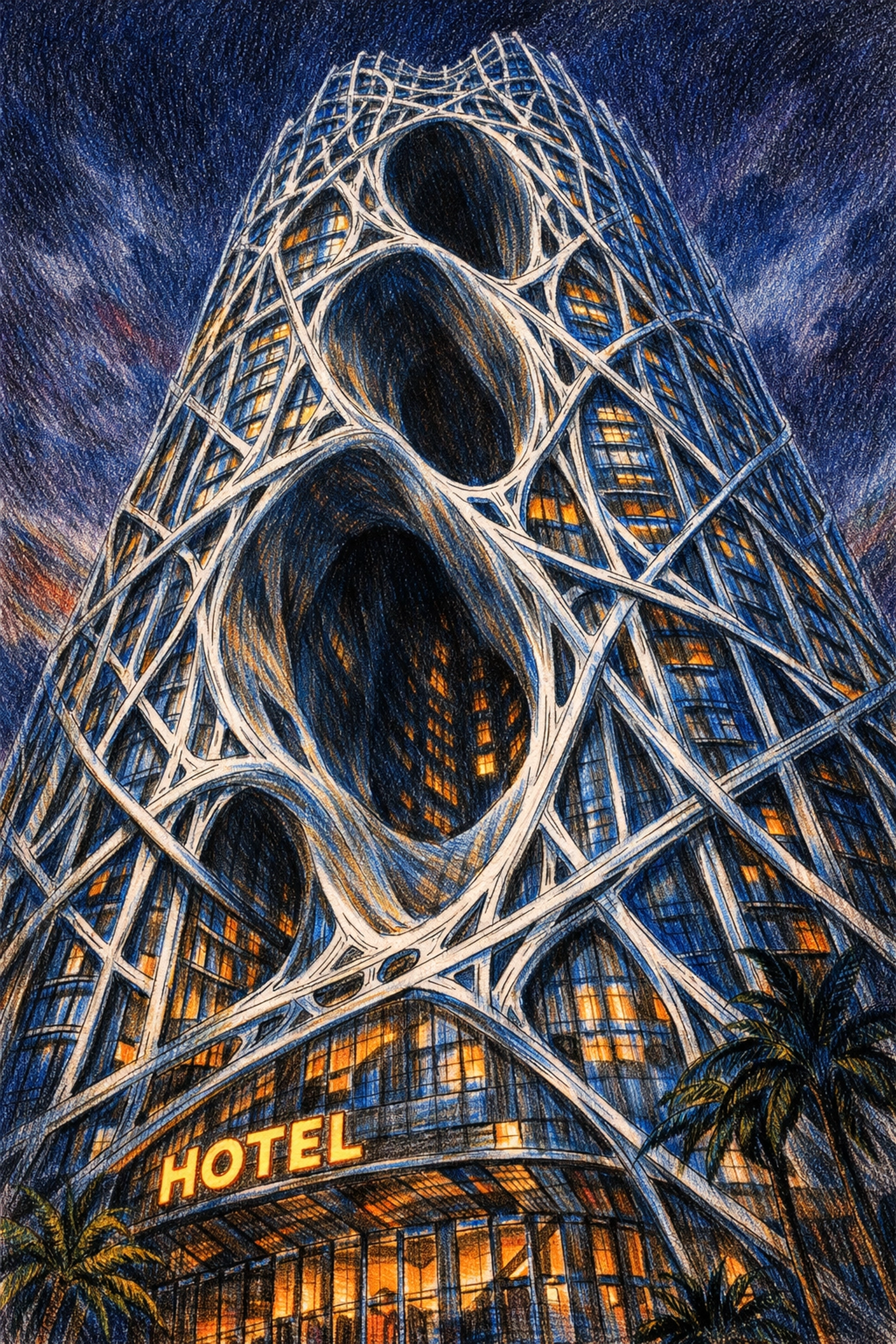
If you want to see the pinnacle of ZHA’s influence on the hospitality industry, look at the Morpheus Hotel in Macau. It features the world’s first free-form high-rise exoskeleton.
Instead of hiding the support beams inside the walls, Hadid put them on the outside. This allowed the interior to be completely open and free of pillars. This "secret" allows for unprecedented flexibility in luxury hospitality design. Without columns getting in the way, the interior can be carved into any shape imaginable. It’s a literal skeletal structure that allows the building to "breathe" and have holes right through the middle, creating stunning voids that guests can look through.
Why Experts Don't Want You to Know How Simple the Concept Is
The industry likes to make Hadid’s work sound like magic or impossible genius. But the core "secret" is actually quite simple: Stop compromising.
Most designers start with a bold idea and then slowly chip away at it until it fits a standard budget or a standard building method. Hadid’s team does the opposite. They find new ways to build (like 3D printing or custom-molded materials) to make the vision possible.
When we look at sustainable hotel architecture today, we see Hadid’s influence in the way we use materials. She pushed for materials that could be cut at angles or molded into complex shapes, which has led to more efficient use of resources in the long run.
Bringing the "Hadid Touch" to Your Project
You don't need a billion-dollar budget to use these secrets. Whether you're a hotel owner or a designer, you can apply these principles to any boutique hotel interior design:
- Embrace Curvature: Even a curved reception desk or a rounded corner in a hallway can break the "box" and make a space feel more premium.
- Think of the Whole: Don't just buy off-the-shelf furniture. Look for pieces that share a common design language with your architecture.
- Use Light as a Material: Hadid used light channels to trace the lines of her buildings. In your own design, use hidden LED strips to highlight the "flow" of a room rather than just hanging a light in the middle of the ceiling.
- Prioritize the Guest Experience: Every curve should lead the eye or the body to a specific place. Design for movement, not just for a static photo.
The Lasting Legacy of Zaha Hadid
Zaha Hadid’s impact on luxury hospitality design can’t be overstated. She showed the world that buildings can be as expressive as any painting or sculpture. She proved that boutique hotel interior design could be a holistic experience where the architecture and the interiors are one and the same.
At My Hotel Design, we believe that the future of the industry lies in this blend of technology, sustainability, and bold creativity. Hadid might have kept her specific digital algorithms close to the chest, but her real secret was her courage to imagine a world without straight lines.
The next time you’re planning a project, ask yourself: "Am I building a box, or am I building an experience?" If you choose the latter, you’re already following in Zaha’s footsteps.