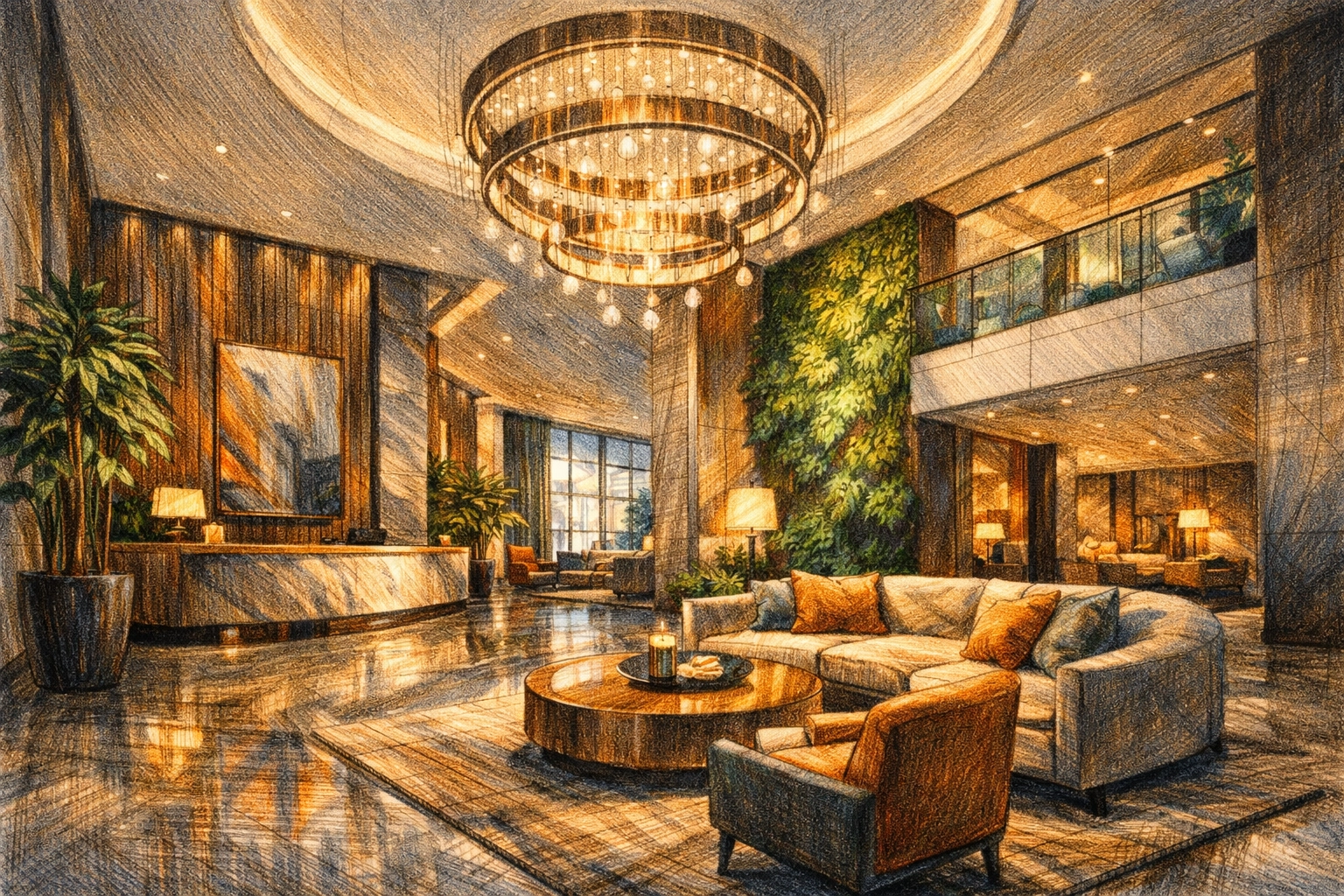
When a guest walks through your front doors, the clock starts. You have exactly seven seconds to make a first impression. In the world of hospitality, those seven seconds happen in the lobby.
For a long time, hotel lobbies were just "waiting rooms." You stood in a line at a mahogany desk, grabbed a key, and headed to your room. But things have changed. Today, the lobby is the heart and soul of the hotel. It’s a workspace, a social club, a coffee shop, and a sanctuary all rolled into one. At My Hotel Design, we call this the "Third Space", the place between home and work where people actually want to spend their time.
Creating a modern lobby isn't just about picking out a cool sofa. it’s about orchestrating a sensory experience that tells your brand’s story before the guest even says hello to the front desk.
The Shift to the "Living Room" Concept
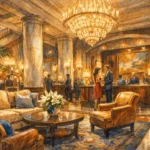
The biggest trend in modern lobby design is the move away from the transactional and toward the residential. We want guests to feel like they are entering a very well-designed living room, not a sterile institution.
This means the traditional, massive reception desk is disappearing. In its place, we’re seeing smaller, "pod-style" desks or even just staff members with tablets who meet you at the door. By removing that physical barrier between the staff and the guest, you immediately create a more personal, welcoming vibe.
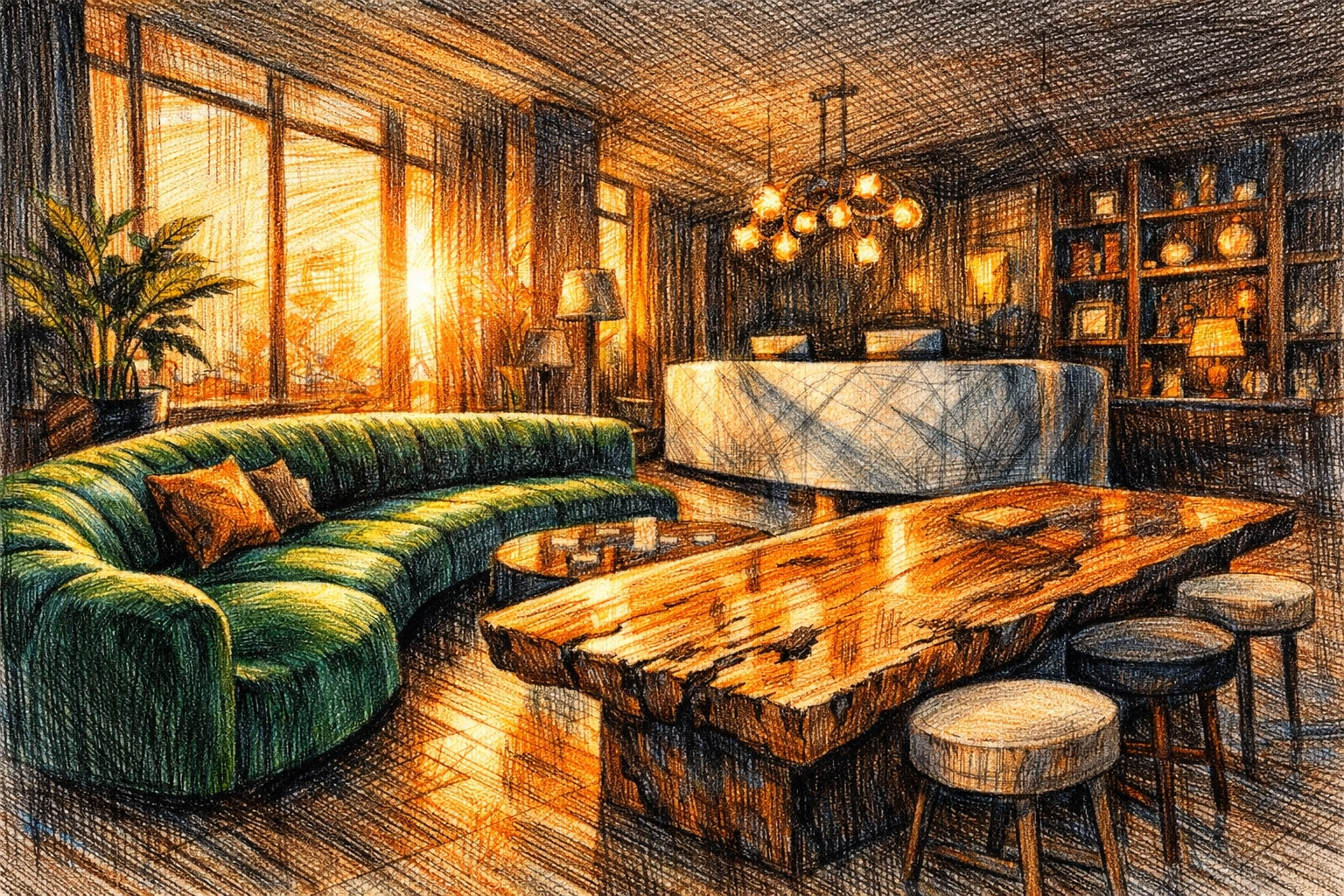
But a "living room" needs more than just a couch. It needs zones. A great modern lobby uses "multi-zone" planning to accommodate different types of guests at the same time:
- The Social Zone: Open areas with communal tables where people can work on laptops or have a quick meeting.
- The Quiet Zone: Tucked-away nooks with high-backed armchairs for someone who wants to read a book or wait for an Uber in peace.
- The Bar/Cafe Zone: A central hub that transitions from a coffee bar in the morning to a cocktail lounge at night.
Designing for the Senses: It’s More Than Just Looks
When we talk about "design," most people think about what they see. But a powerful first impression is built on what you hear, smell, and feel, too.
Layered Lighting
Lighting is the most powerful tool in our kit. We avoid "flat" lighting at all costs. Instead, we use layers. Ambient lighting provides the base comfort, while accent lighting highlights architectural features or local artwork. Finally, task lighting is used in functional areas like the check-in pods or communal tables.
One of the coolest developments recently is circadian lighting. These systems change color temperature throughout the day: bright and cool in the morning to wake guests up, and warm and amber in the evening to help them relax. It’s a subtle touch, but guests feel the difference in their energy levels.
Acoustic Management
Nothing ruins a luxury vibe faster than a lobby that sounds like a gymnasium. Hard surfaces like marble and glass look great, but they bounce sound everywhere. We use acoustic plaster on the ceilings, heavy drapes, and inset rugs to dampen the noise. You want a "low hum" of activity, not a chaotic echo.
The Power of Touch
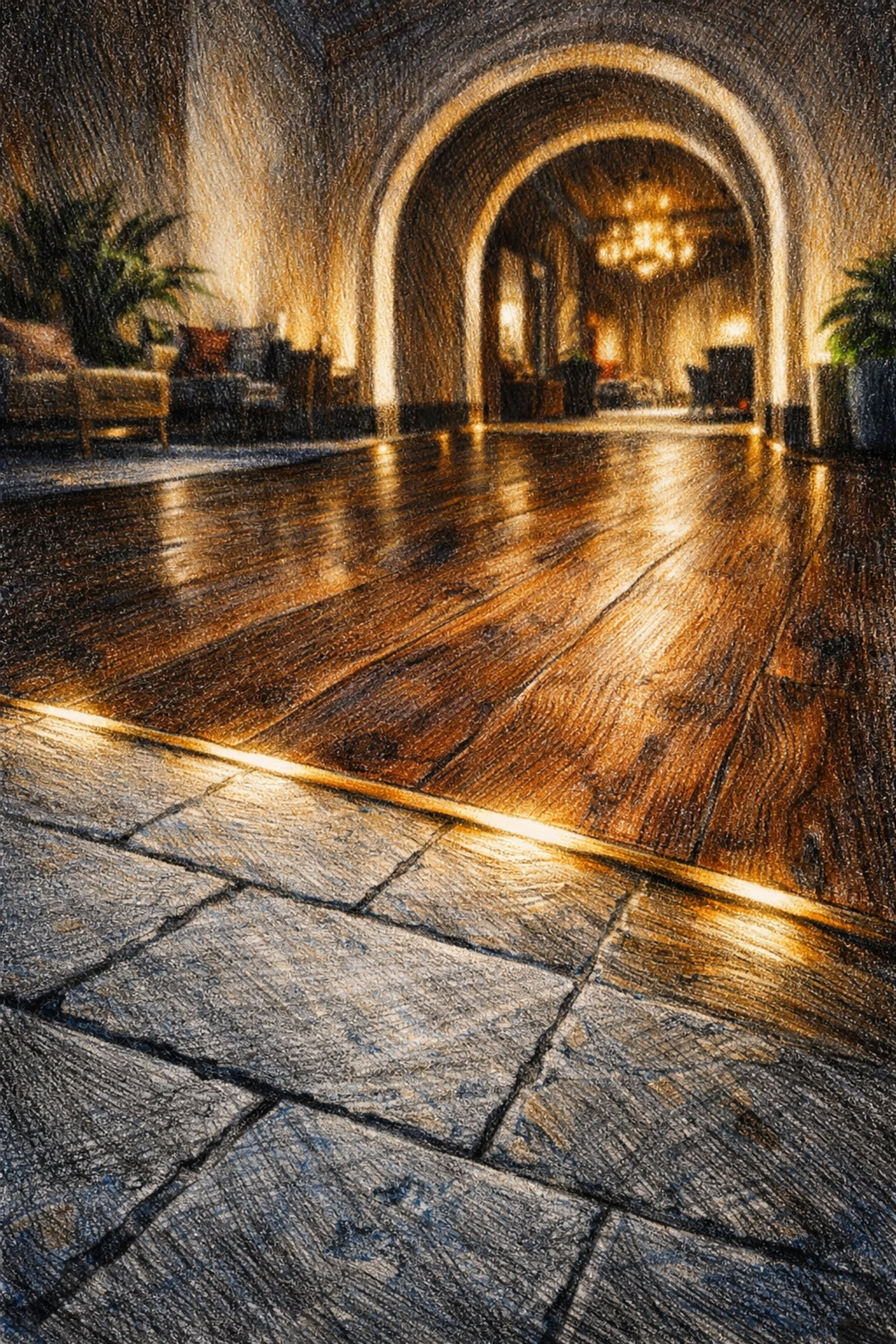
Materials matter. We choose tactile materials that age well. Stone where foot traffic is heavy, but warm hardwoods in seating areas. When a guest touches a handrail or sits in a chair, the material should feel substantial and permanent. This signals quality and stability.
Biophilic Design: Bringing the Outdoors In
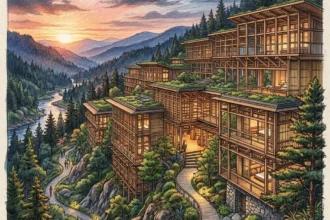
Biophilic design is a fancy way of saying "we like nature." But it’s backed by real science. Research shows that guests spend significantly more time (about 36% more) in lobbies that incorporate natural elements compared to those that don't.
It’s not just about putting a fern in the corner. We’re talking about:
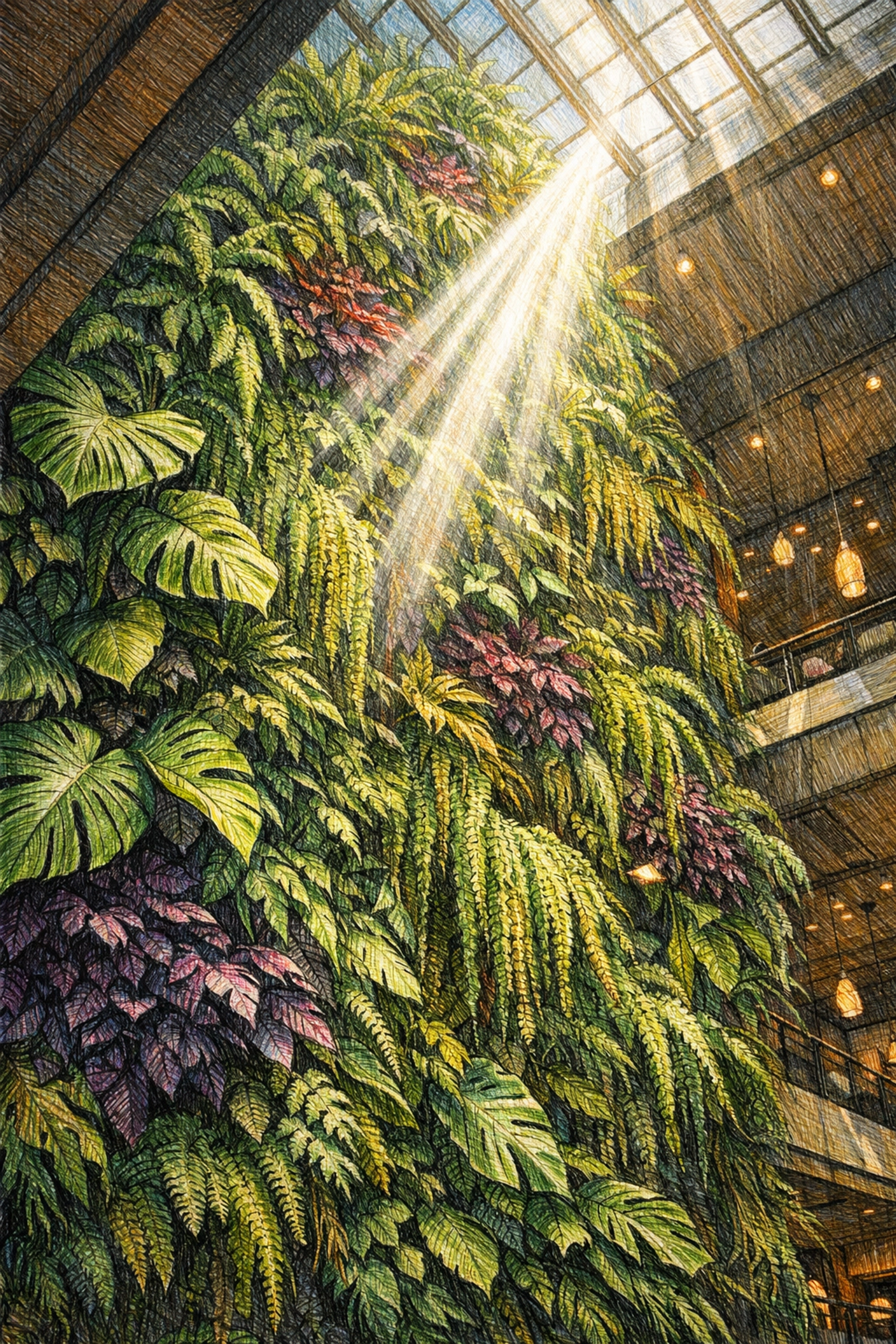
- Living Walls: Vertical gardens that act as natural air purifiers and stunning focal points.
- Natural Light: Maximizing floor-to-ceiling windows to connect the interior with the outside world.
- Natural Textures: Using raw stone, unfinished wood, and water features to mimic the calming patterns of nature.
Incorporating these elements doesn't just look good; it reduces guest stress and creates a sense of wellness the moment they walk in.

Sustainable Architecture: The New Standard
Sustainability is no longer a "nice to have" or a marketing gimmick. It’s a foundational part of modern hotel architecture. Today’s travelers: especially younger generations: are looking for brands that align with their values.
In the lobby, sustainability looks like:
- Local Sourcing: Using stone from a nearby quarry or furniture made by local craftsmen. This reduces the carbon footprint and gives the hotel a "sense of place" that guests love.
- Energy Efficiency: Using smart glass that tints automatically to reduce heat gain, or LED lighting systems that pull a fraction of the power of traditional bulbs.
- Durable Materials: True sustainability is building something that doesn't need to be replaced in five years. We prioritize high-quality, durable materials that look better as they age.
When guests see that you’ve put thought into the environment, it builds trust. It shows that you care about more than just the bottom line.
Invisible Technology: Enhancing, Not Replacing
Technology in a lobby should be like a great waiter: there when you need it, but invisible when you don’t. We are seeing a move toward "invisible tech" that removes friction without making the lobby look like an Apple store.
IoT (Internet of Things) sensors can adjust the climate and lighting based on how many people are in the room. High-speed Wi-Fi and charging stations are built directly into the furniture so guests don’t have to hunt for an outlet.
Many hotels are also moving toward digital check-in. This allows guests to skip the line entirely and use their phone as a room key. Does this mean the "first impression" is lost? Not at all. It just means the staff is free to act as hosts rather than data-entry clerks. Instead of asking for a credit card, they can offer a glass of water or a local recommendation.
The Strategic Path: Spatial Organization
A well-designed lobby guides the guest intuitively. You shouldn't need a dozen signs telling people where to go.
We think about the "Guest Journey" in three distinct phases:
- The Threshold: This is the buffer zone. It manages the transition from the noisy street to the calm interior. Strong door seals and vestibules help manage the temperature and sound.
- The Welcome: This is where the initial "Wow" factor happens. The sightlines should be clear. The guest should immediately see where they can get help (the reception pod) and where they can relax (the lounge).
- The Transition: This is the path to the elevators or the restaurant. We use subtle changes in floor patterns or lighting levels to "lead" the guest where they need to go.
Why It All Matters
At the end of the day, your lobby is a physical representation of your brand's promise. If your brand is about "luxury and relaxation," but your lobby is crowded, loud, and poorly lit, the guest is already disappointed before they even see their room.
Modern lobby design is an investment in guest loyalty. When you create a space that feels intentional, comfortable, and connected to nature, you aren't just giving them a place to wait for their room: you’re giving them a reason to come back.
The best lobbies aren't the ones with the most expensive chandeliers. They are the ones where guests feel seen, relaxed, and inspired. It’s about creating a space that anticipates their needs before they even know they have them. That is the ultimate first impression.